

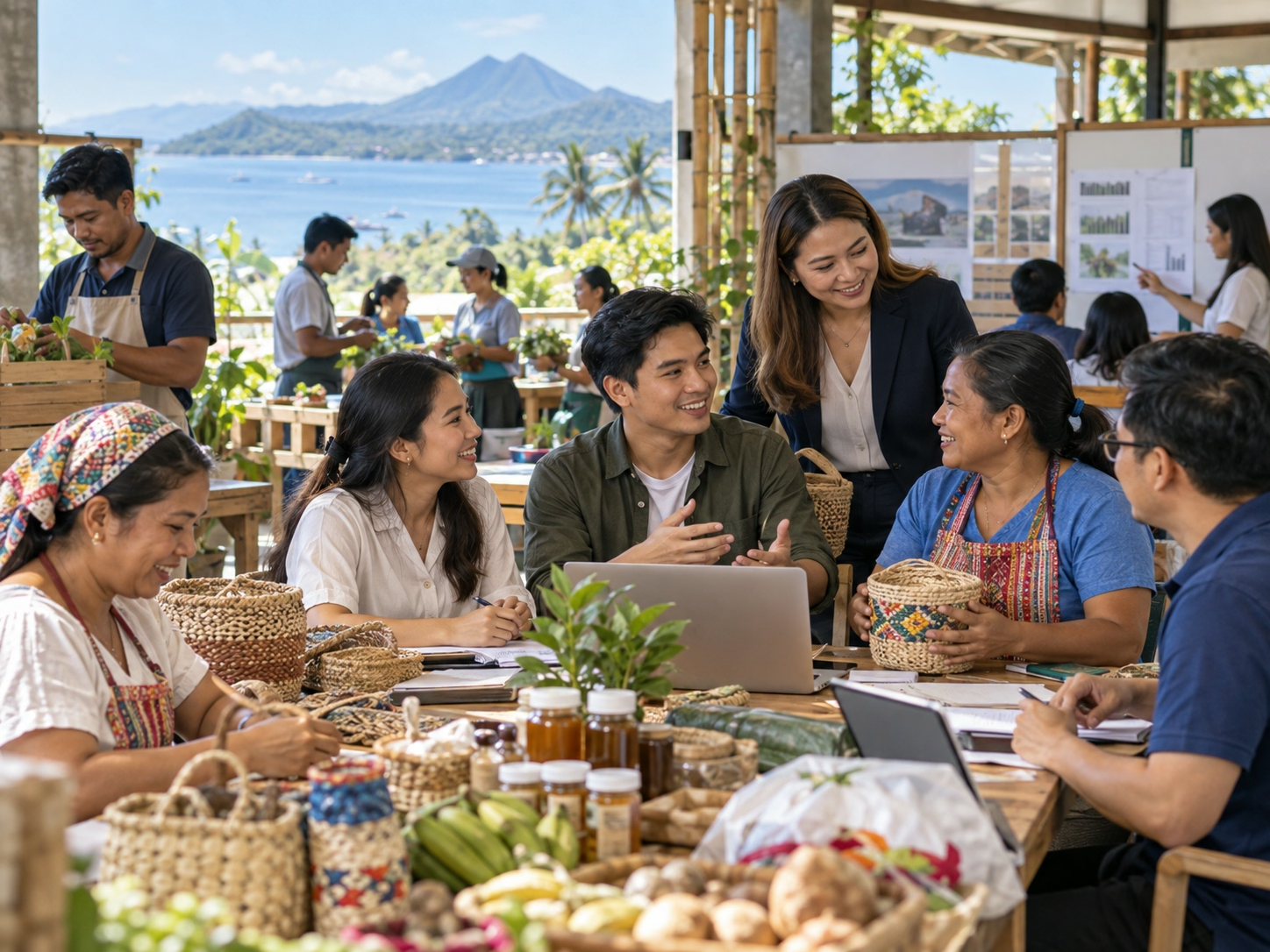
The Philippines has demonstrated remarkable progress in fostering sustainable entrepreneurship, yet significant barriers continue to limit the sector’s potential. Understanding these challenges—and the solutions emerging to address them—is essential for entrepreneurs, policymakers, and investors seeking to build a more resilient and inclusive social economy.
The Certification Conundrum
One of the most persistent obstacles facing the sector is the absence of a harmonized definition and certification system for social enterprises. A 2026 study by the Philippine Institute for Development Studies found that this gap hinders trust-building and policy integration, with practitioners expressing the need for flexible legal recognition and context-sensitive standards.
The research, based on key informant interviews with social enterprises affiliated with The Spark Project, identified the risk of “social washing”—where organizations claim social missions without genuine impact—as a significant concern undermining sector credibility.
The challenge is compounded by the diversity of social enterprise models in the Philippines. From cooperatives operating under the Cooperative Code to corporations registered under the Corporation Code, and from micro-enterprises covered by the Barangay Micro Business Enterprises Act to small and medium enterprises under the Magna Carta for MSMEs, the legal landscape is fragmented.
As the PIDS study notes, respondents express the need for “flexible legal recognition, context-sensitive standards, and government support beyond regulation, including access to finance and storytelling”. This suggests that any certification framework must balance rigor with accessibility, ensuring that small, community-rooted enterprises are not excluded by overly complex requirements.
Access to Finance: The Persistent Gap
Access to appropriate financing remains a critical constraint for social enterprises, particularly those operating at the community level. While government programs such as the proposed Social Enterprise Development Fund and private initiatives like the BPI Sinag Program provide valuable support, many enterprises continue to struggle with the transition from grant dependence to commercially viable operations.
The problem is particularly acute for nature-based and climate enterprises. As Villgro Philippines has observed, private sector investment in these areas remains limited, held back by the absence of standardized impact metrics and unclear financial return profiles. Many enterprises doing serious work remain invisible to mainstream capital.
Innovative financing models are beginning to emerge. Villgro Philippines operates a Climate-Gender Working Capital facility—one of the few small and growing business-focused blended financing facilities in the region—unlocking small-ticket financing for climate enterprises by bringing together local investors. Such models demonstrate that with appropriate structuring, the gap between impact investors and community enterprises can be bridged.
Scaling Impact Through Institutional Partnerships
The path to scaling social impact increasingly runs through institutional partnerships. The 2026 memorandum of understanding between the Cooperative Development Authority and De La Salle University exemplifies this approach, combining the CDA’s operational reach with DLSU’s research expertise and SDG orientation.
Under this three-year partnership, the CDA provides cooperative-specific training and handholding services, while DLSU offers research expertise and SDG orientation. The collaboration aims to enhance micro, small, and medium-scale enterprises by sharing best practices, mobilizing resources, and co-leading initiatives.
CDA OIC Administrator Atty. Ma. Lourdes P. Pacao described the agreement as “a covenant that bridges the gap with the classroom and the community, aligning academic excellence of a Catholic-educational institution with the grassroots power of cooperative movement in the Philippines”.
Building a Supportive Ecosystem
Beyond certification and finance, the development of a robust support ecosystem requires attention to capacity-building, market access, and storytelling. The PIDS study identified these as critical components for enabling social enterprise growth and resilience.
Government agencies are responding with targeted programs. The DENR’s Forest Management Bureau, for example, conducted a five-day strategic planning workshop in September 2026 aimed at strengthening national reforestation efforts and expanding sustainable forest-based social enterprises. Participants drafted a five-year plan and developed tools needed to build resilient and sustainable forest-based enterprises.
The sector’s future trajectory will depend on the ability to address these structural challenges while preserving the community-centered ethos that distinguishes social enterprises from conventional businesses. As the Philippine social economy matures, the lessons learned from early adopters—both successes and failures—will inform the development of a more enabling environment for the next generation of sustainable entrepreneurs.