
The influence of Western fashion on Philippine fashion is visible in almost every part of daily life. From office attire and school uniforms to streetwear and formal gowns, many clothing choices in the Philippines show the impact of Europe and the United States. This influence developed over several centuries and continues today through global media, international brands, and digital culture.
Historically, Filipino clothing was based on local needs and resources. The warm climate encouraged light, breathable garments. Many communities used natural fibers and handmade textiles. Clothing was also connected to identity, with different regions and groups developing their own forms of dress. Western influence began strongly during Spanish colonization, when European ideas of modesty, religion, and social class affected local clothing. Women’s garments became longer and more covered, while men’s clothing adopted shirts and trousers.
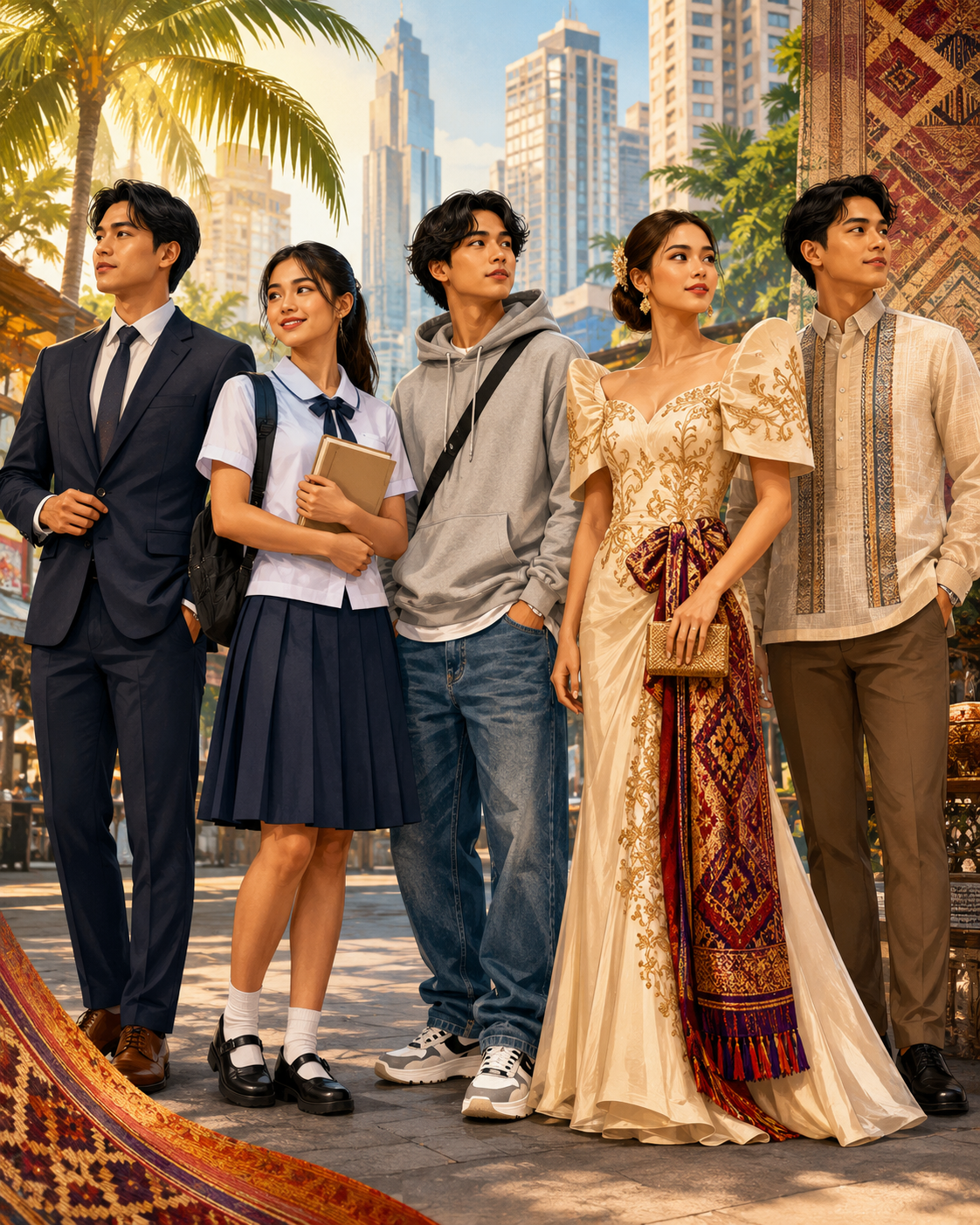
The American colonial period made Western fashion more widespread. American education and government systems promoted Western dress as part of modern public life. Students wore uniforms based on Western models, while professionals adopted suits, collared shirts, skirts, and formal shoes. These styles became signs of education and respectability. Over time, Western clothing was no longer seen as foreign in many settings; it became normal for school, work, and urban life.
Media was another major channel of influence. Hollywood films introduced Filipinos to glamorous dresses, stylish suits, fashionable accessories, and beauty trends. Later, television and magazines helped spread Western styles faster. In recent decades, social media has made this process even quicker. A trend seen in the United States or Europe can appear in Filipino malls, online shops, and street fashion within a short period.
One of the most important changes brought by Western fashion is the popularity of casual wear. Jeans, T-shirts, sneakers, hoodies, and athletic clothing are widely worn by Filipinos of different backgrounds. These garments are comfortable and practical, especially for students and young workers. They also allow people to express personality through brands, colors, and styling. Western streetwear has become especially popular among younger Filipinos who follow music, sports, gaming, and internet culture.
Western influence is also clear in formal fashion. Evening gowns, cocktail dresses, tuxedos, and tailored suits are common at weddings, graduations, corporate events, and pageants. Beauty pageants in the Philippines often showcase Western-style gowns while also including Filipino details such as embroidery, butterfly sleeves, or local textiles. This mixture reflects the way Filipino fashion often combines global glamour with national pride.
However, the spread of Western fashion has also raised concerns. Some critics argue that imported trends can overshadow traditional textiles and local craftsmanship. Fast fashion may also encourage overconsumption and reduce appreciation for handmade garments. In response, many Filipino designers and cultural advocates are promoting sustainable fashion, local weaving, and heritage-based design.
Modern Philippine fashion is now moving toward a more balanced identity. Designers use Western silhouettes but include Filipino fabrics, indigenous patterns, and traditional techniques. Consumers are also becoming more interested in supporting local brands that celebrate Filipino culture. This shows that Western influence does not have to erase local identity.
Western fashion has transformed the Philippines by shaping what people wear in schools, workplaces, celebrations, and casual settings. Even so, Filipino fashion remains creative and flexible, turning outside influences into styles that reflect local history, climate, and cultural pride.