
The relationship between business and education is becoming increasingly important in the Philippines. As the economy moves toward digital services, advanced manufacturing, innovation-driven enterprises, and sustainable development, workers must possess a wider range of skills than before. Academic knowledge remains valuable, but it must be supported by practical ability, technological awareness, communication skills, and adaptability. Strong collaboration between companies and educational institutions can help produce graduates who are ready for the complex demands of modern work.
One of the central issues facing the Philippine labor market is skills mismatch. Students may complete their studies but still find it difficult to meet employer expectations. At the same time, companies may struggle to find applicants with the right combination of technical and soft skills. This problem can be reduced when businesses participate actively in education. By sharing labor market insights, companies can help schools understand which competencies are needed in specific industries. This allows learning programs to become more responsive and useful.
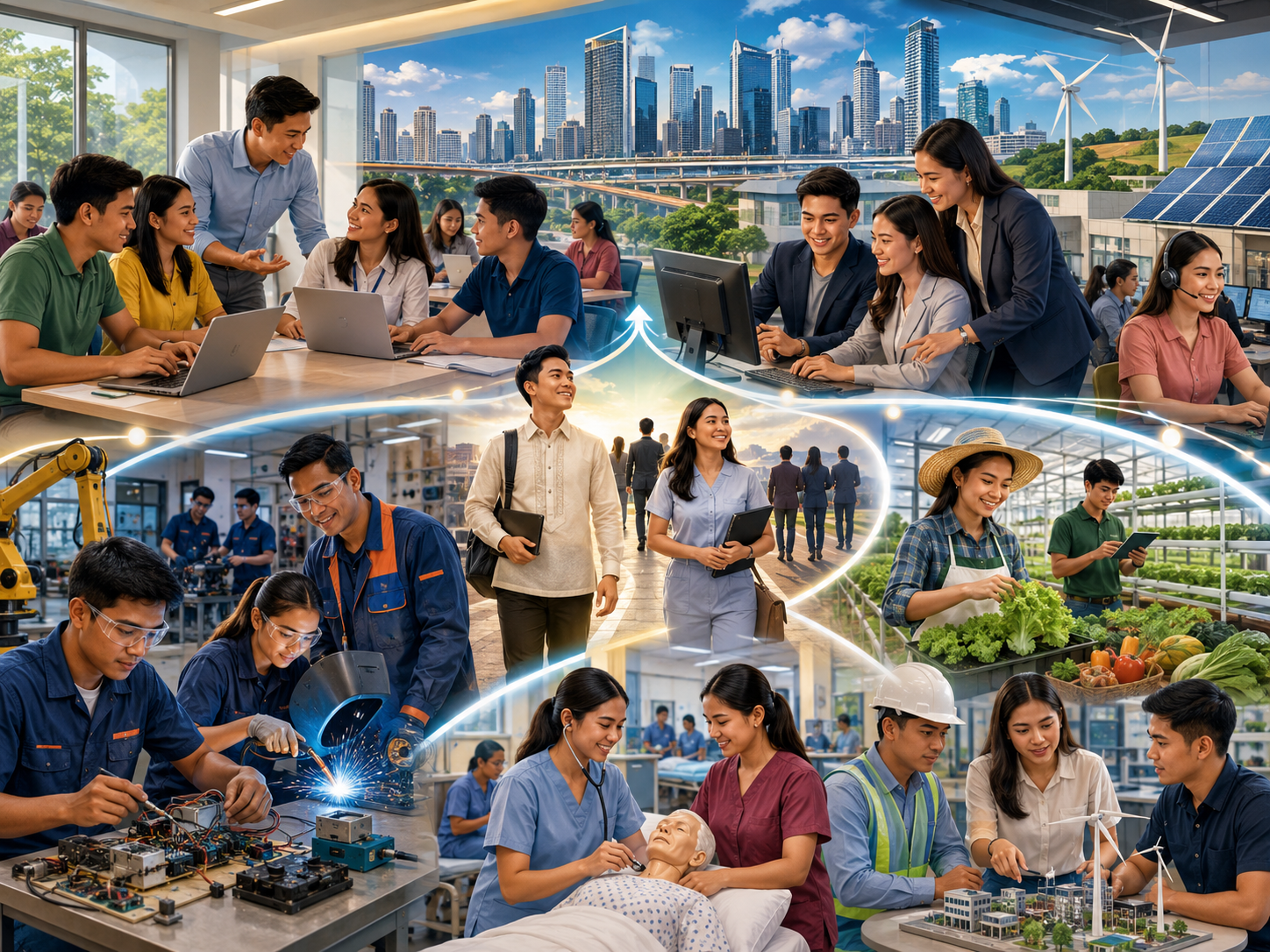
Technical-vocational education offers a clear example of how collaboration can work. Many industries need workers who can perform specialized tasks in areas such as electronics, welding, caregiving, culinary services, construction, automotive maintenance, and tourism. These skills require repeated practice and familiarity with real tools. When training centers partner with employers, students can access workplace-based learning, updated equipment, and industry-recognized standards. This improves the quality of training and increases the chances that graduates can find stable employment.
In higher education, partnerships can support both career readiness and innovation. Universities can work with companies to design internship programs, review course content, organize career mentoring, and develop research projects. Business students can study real company cases. Engineering students can work on product design or process improvement. Information technology students can build applications, analyze data, or test cybersecurity systems. These experiences help students connect academic concepts with actual business problems.
The business process outsourcing industry shows why education-industry cooperation is important. The sector requires English communication, customer service, problem-solving, digital literacy, and emotional resilience. Schools can help develop these skills, but companies understand the specific performance standards required in the workplace. Through partnerships, training can be made more realistic. Similar cooperation is needed in healthcare support, logistics, financial technology, renewable energy, agribusiness, and creative industries.
Collaboration can also promote social inclusion. Not all Filipino students have equal access to quality education, technology, or professional networks. Businesses can support scholarships, mentorship programs, community training, online learning platforms, and rural skills development. These initiatives can help young people from disadvantaged backgrounds gain access to better career opportunities. When partnerships reach beyond elite institutions, they can contribute to more balanced national development.
To succeed, these partnerships must be structured and sustained. Schools and companies should agree on clear goals, training standards, student support systems, and evaluation methods. Industry input should be regular, not occasional. Educators should also protect the broader purpose of learning by ensuring that students develop critical thinking, ethics, creativity, and civic responsibility. The goal is not only to train workers for today’s vacancies but to prepare people for long-term career growth.
The Philippines has the talent, energy, and educational foundation needed to build a competitive future workforce. By connecting classrooms with workplaces, the country can produce graduates who understand both theory and practice. Business and education collaboration can strengthen employability, increase productivity, support innovation, and help Filipino workers succeed in a rapidly changing world.