
Innovation Is Not Only About New Technology
When people hear the phrase renewable energy innovation, they often think of advanced batteries, smart grids, or new solar panels. In the Philippines, however, innovation is also happening in project financing, land development, corporate power supply, resource diversification, and the ability to build clean power in a challenging island geography.
This is why companies such as ACEN, AboitizPower, Energy Development Corporation, Solar Philippines, Citicore Renewable Energy Corporation, and Alternergy are worth watching. Each company approaches the renewable energy market differently, but together they show how the Philippines is moving from ambition to execution.
The national policy backdrop is clear. The Department of Energy has promoted renewable energy as a major part of the country’s long-term energy mix, with targets of 35% renewable energy share by 2030 and 50% by 2040. The DOE renewable energy page is available at https://www.doe.gov.ph/renewable-energy.
ACEN Represents Portfolio Innovation
ACEN’s contribution is not limited to building solar and wind projects. Its larger innovation is portfolio strategy. By developing and investing in renewable assets across multiple markets, the company has shown how a Philippine energy firm can scale beyond individual projects.
This matters because renewable energy development requires access to capital, risk management, and long-term planning. A diversified portfolio can help a company manage weather variation, regulatory differences, and market cycles. ACEN’s growth gives the Philippine sector a more global profile.
AboitizPower Shows the Utility Transition Model
AboitizPower represents the transition challenge faced by established energy companies. It must maintain reliable supply while expanding cleaner generation. That makes its renewable energy strategy highly practical.
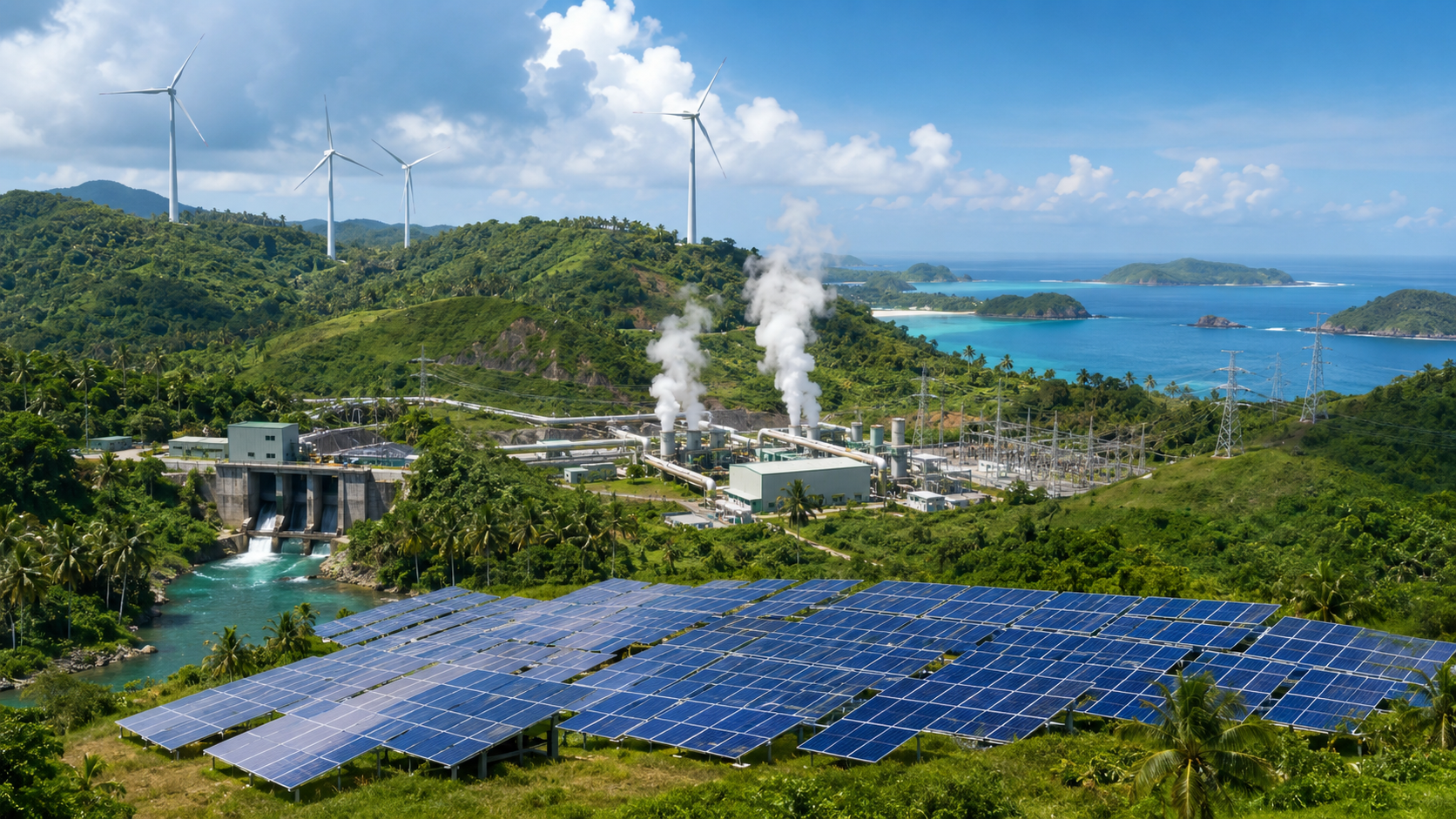
Its hydro and geothermal assets are important because they provide renewable electricity with characteristics different from solar and wind. Hydro can offer flexibility depending on water conditions, while geothermal can provide steady output. This diversity helps the power system avoid overdependence on a single technology.
EDC Proves the Value of Local Resource Expertise
Energy Development Corporation remains one of the strongest examples of resource-based innovation in the Philippines. Geothermal power depends on deep technical knowledge, exploration capability, and long operating experience. EDC’s work demonstrates how local expertise can become a strategic energy asset.
For the Philippines, geothermal is especially valuable because it supports clean baseload generation. As more solar and wind projects enter the grid, geothermal can help maintain stability and reduce the need for imported fossil fuel backup.
Solar Philippines and Citicore Bring Speed and Scale
Solar-focused companies have pushed the renewable energy conversation forward by showing that large solar farms can become commercially meaningful. Solar Philippines helped bring utility-scale solar into the public spotlight, while Citicore has developed a business model centered on renewable platforms and clean power delivery.
Their importance is tied to speed. Solar projects can often be developed faster than many conventional power plants, making them attractive in a country where demand growth and supply concerns can appear quickly. The next competitive frontier will be combining solar with battery storage and better grid coordination.
Alternergy Adds Depth to the Renewable Pipeline
Alternergy contributes through a mix of renewable technologies, including wind and run-of-river hydro. Its role highlights a key point: the Philippine energy transition needs many types of developers, not only the largest utilities.
A diversified market can produce better regional solutions. Some areas may be suited for solar, others for wind, hydro, geothermal, or hybrid systems.
The Real Test Ahead
The companies redefining Philippine clean power now face a demanding next phase. They must convert project pipelines into operating capacity, work around transmission bottlenecks, manage community concerns, and keep electricity affordable. Their progress will determine whether renewable energy becomes not just a policy target, but a reliable foundation for the country’s economic future.