
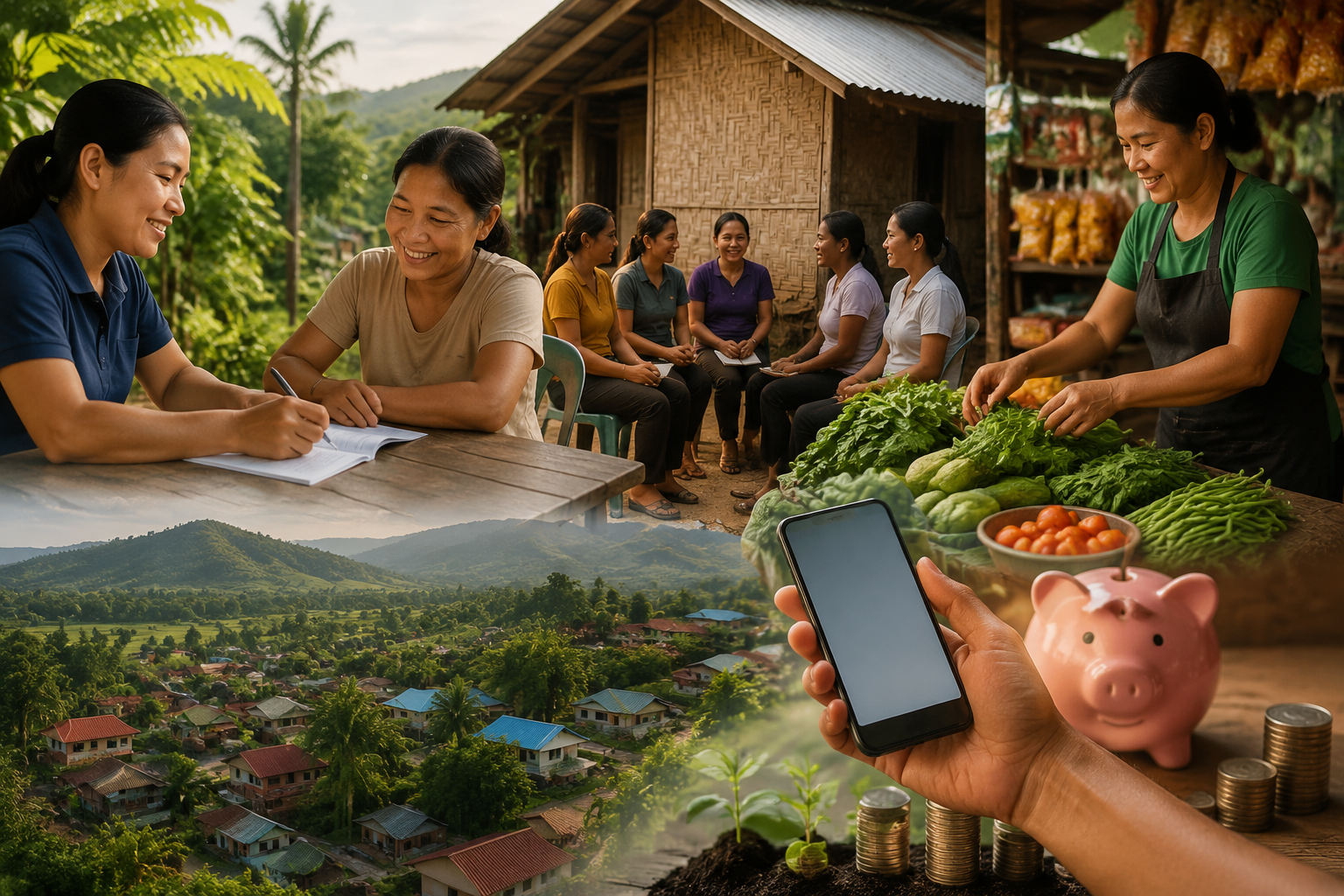
Microfinance has become one of the most important financial inclusion tools in developing economies, and the Philippines is often cited as one of its stronger success stories in Southeast Asia. For many low-income households, small business owners, and informal workers, access to traditional banking services remains limited due to lack of collateral, irregular income, or geographic barriers. This is where microfinance plays a crucial role.
In simple terms, microfinance provides small-scale financial services—such as microloans, savings accounts, and basic insurance—to individuals who are typically excluded from conventional banking systems. In the Philippines, this system has evolved into a structured ecosystem supported by microfinance institutions (MFIs), rural banks, cooperatives, and government-backed financial inclusion programs.
According to the Bangko Sentral ng Pilipinas (BSP), financial inclusion is a national priority, with ongoing efforts to expand access to credit and savings services across underserved regions (https://www.bsp.gov.ph). This policy direction has helped microfinance grow into a key driver of local economic activity.
How Microfinance Works in the Philippines and Why It Matters
The microfinance system in the Philippines is built around accessibility and community-based trust rather than traditional collateral-based lending. Instead of requiring property titles or formal employment records, many microfinance institutions assess borrowers through group lending models, local reputation, and cash-flow-based evaluation.
A typical process works like this: a small entrepreneur—such as a street food vendor, sari-sari store owner, or tricycle driver—applies for a small loan. After a basic assessment, funds are released in relatively small amounts. Repayments are usually made weekly or bi-weekly, which aligns with the borrower’s daily income cycle.
Key players in this ecosystem include:
- Microfinance NGOs and MFIs, which directly serve low-income communities
- Rural and cooperative banks, which extend services to remote areas
- Government initiatives, which promote inclusive finance through regulation and support programs
The Asian Development Bank (ADB) has highlighted that microfinance in the Philippines contributes significantly to poverty reduction and entrepreneurship development by improving access to working capital (https://www.adb.org).
Unlike traditional banking, microfinance emphasizes “social collateral”—trust within a group or community replaces physical collateral. This approach allows financial access even for individuals who would otherwise be excluded from the formal economy.
Economic Impact: How Microfinance Shapes Local Communities
The impact of microfinance in the Philippines is most visible at the grassroots level, where small injections of capital can significantly change household income stability.
One of the most important contributions is supporting micro and small enterprises (MSEs). Many local businesses operate on very thin margins and rely on daily cash flow. Microfinance allows them to:
- Purchase additional inventory
- Expand small-scale operations
- Stabilize cash flow during slow business periods
For example, a small food vendor in Quezon City may use a microloan to buy an additional cooking station. This seemingly small investment can double customer capacity during peak hours, directly increasing daily income.
Another major impact is financial inclusion for informal workers. In the Philippines, a large portion of the workforce operates outside formal employment structures. Microfinance provides these individuals with a pathway to financial services they would otherwise not access.
At a macro level, microfinance contributes to:
- Increased local consumption
- Growth of micro-enterprises
- Strengthening of community-level economic resilience
The World Bank also emphasizes that financial inclusion is strongly correlated with reduced income inequality and improved economic mobility (https://www.worldbank.org).
However, the impact is not purely positive. The effectiveness of microfinance depends heavily on responsible borrowing and proper financial literacy among borrowers.
Challenges, Risks, and Real-World Limitations
Despite its benefits, microfinance in the Philippines is not without challenges. One of the most discussed issues is relatively high interest rates compared to traditional bank loans. These rates reflect higher operational costs of serving small, dispersed borrowers, but they can still place pressure on low-income clients.
Another challenge is over-indebtedness. Some borrowers take multiple loans from different institutions without fully understanding repayment obligations. This can create a cycle of debt rather than financial stability.
There is also the issue of limited financial literacy. Many borrowers understand how to receive loans but lack deeper knowledge about interest calculations, repayment planning, or risk management.
In real-life scenarios, a small shop owner might use a loan to expand inventory but fail to account for seasonal fluctuations in sales. When income drops unexpectedly, repayment becomes difficult, potentially leading to penalties or renewed borrowing to cover existing debt.
These challenges highlight an important truth: microfinance is not a guaranteed solution to poverty. It is a financial tool that requires informed and disciplined use.
Practical Insights for Borrowers and Communities
To maximize the benefits of microfinance, both borrowers and institutions must adopt responsible practices.
For individuals considering microfinance, several practical steps can help:
First, use loans strictly for productive purposes, such as business expansion or income-generating activities. This increases the likelihood that the loan will generate returns that support repayment.
Second, always calculate repayment capacity before borrowing. A simple rule is to ensure that weekly or monthly installments do not exceed a manageable portion of regular income.
Third, compare different microfinance providers. Institutions may vary in interest rates, repayment terms, and service structures. Resources like MixMarket provide data on microfinance institutions globally.
Fourth, develop basic financial tracking habits. Even a simple notebook recording daily sales and expenses can significantly improve financial awareness.
From a policy perspective, strengthening financial literacy programs and digital financial services can further enhance the positive impact of microfinance across rural and urban areas.
Microfinance in the Philippines plays a critical role in supporting economic participation among low-income households and small entrepreneurs. By providing access to small-scale financial services, it helps bridge the gap between informal economic activity and formal financial systems.
Its impact is most visible in local communities where small loans translate into tangible improvements in business activity and household income. However, its effectiveness depends on responsible borrowing, proper financial education, and continuous institutional support.
When used wisely, microfinance becomes more than just credit—it becomes a stepping stone toward financial stability and economic resilience for individuals who are often excluded from traditional banking systems.
For readers interested in deeper understanding, exploring financial inclusion reports from the BSP, World Bank, and ADB can provide broader regional and global context on how microfinance continues to evolve in developing economies.