
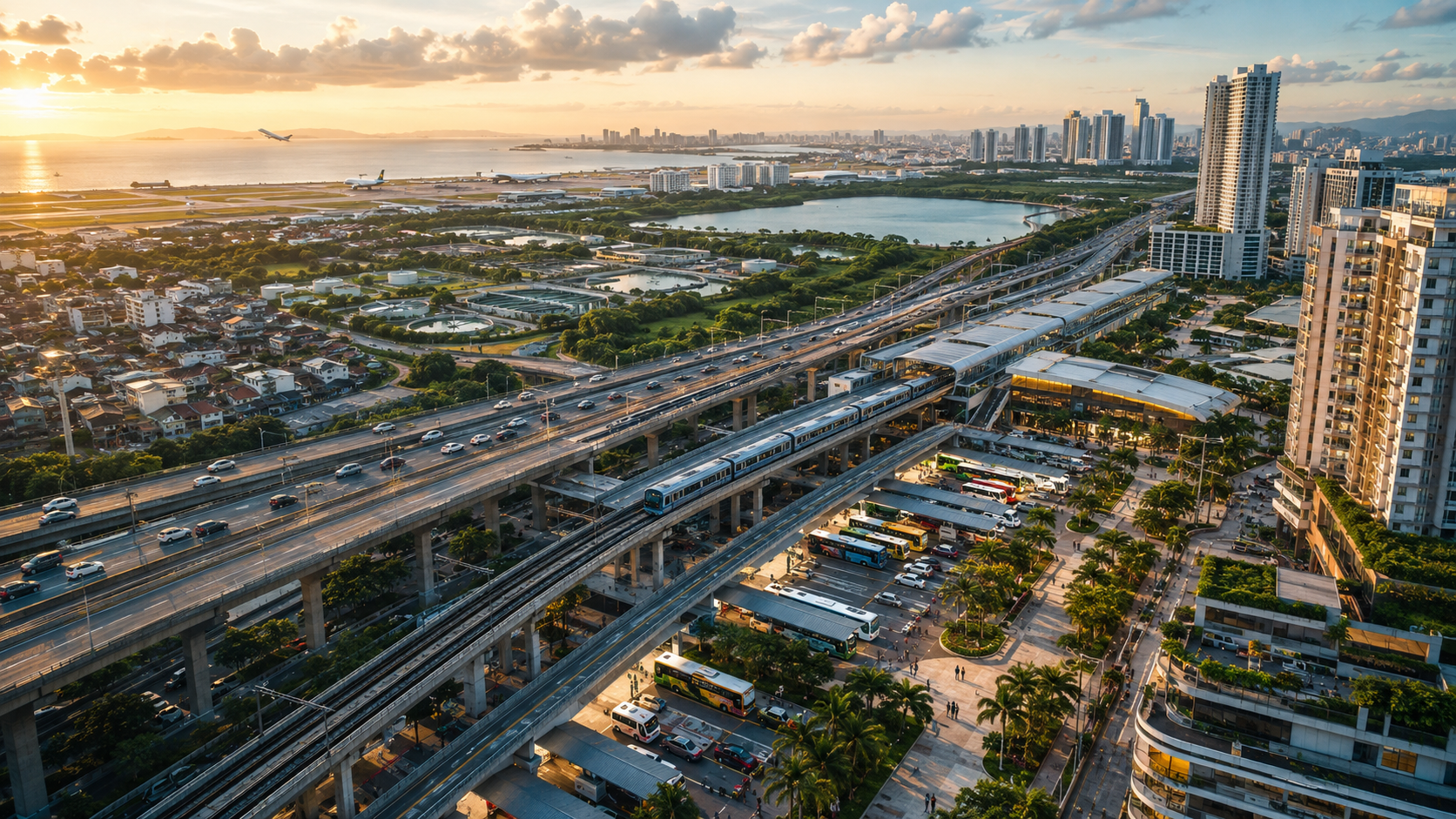
Metropolitan Philippines is in the midst of a structural overhaul. With urban population projected to exceed 70 percent of the total by 2030, the pressure on existing infrastructure is immense. Rather than waiting for government agencies to act alone, a cluster of Filipino conglomerates has assumed the roles of planner, financier, builder, and operator—fundamentally altering the trajectory of urban development. Their massive, interconnected projects are not isolated fixes; they collectively constitute a new urban operating system.
Private Sector as the Engine of Urban Expansion
The “Build Better More” program acknowledges that public resources are insufficient. The Department of Public Works and Highways has increasingly relied on PPPs and unsolicited proposals from established corporations. Data from the National Economic and Development Authority’s 2026 infrastructure dashboard shows that private sector involvement has shaved an average of two years off project delivery timelines compared to purely government-funded works (https://neda.gov.ph/). This speed is crucial for cities that are adding millions of new residents every decade.
San Miguel Corporation’s Vision of Elevated Mobility
SMC Infrastructure has pursued a strategy of vertical expansion: building above existing traffic to multiply capacity without acquiring large amounts of expensive urban land. The Skyway System now functions as a high-speed bypass of Metro Manila’s surface gridlock. MRT-7, with its 14 stations, will integrate with bus and jeepney terminals at each stop, creating a cohesive public transport chain. The group’s Bulacan aerotropolis is designed to decongest the capital by pulling international air traffic and associated commercial activity northward, a deliberate rebalancing of regional development.
Ayala Corporation: Placemaking Through Infrastructure
Ayala’s urban formula combines hard infrastructure with soft amenities. The LRT-1 Cavite Extension stations are woven into the fabric of Ayala Land estates, where street-level retail, parks, and BPO offices line covered walkways to the station entrances. This design philosophy converts a simple train ride into a pleasant pedestrian experience, encouraging modal shift from cars to rail. Manila Water’s advanced wastewater treatment protects the waterways that run through these dense urban clusters, elevating environmental quality. Ayala’s toll road projects in Visayas similarly catalyse economic spillovers into real estate, hospitality, and retail, knitting regions together.
Metro Pacific’s Networked Urban Infrastructure
MPIC’s assets form an interdependent web. The NLEX-SCTEX-CALAX system does more than move vehicles; it defines industrial, residential, and commercial land values. When a new interchange opens, land prices in adjacent municipalities surge, signalling market confidence in accessibility. Maynilad’s water supply expansion into Cavite supports the very same CALAX-served growth areas, illustrating how road and water projects reinforce each other. The Cebu-Cordova Link Expressway, beyond its iconic silhouette, has shortened the supply chain for Mactan’s export processing zones, directly boosting the local economy.
Megawide’s Smart Terminal and Precinct Approach
Megawide’s PITX is a living laboratory for multimodal integration, handling bus, jeepney, UV express, and future rail passengers in one air-conditioned complex. By consolidating provincial bus endpoints away from congested arterial roads, PITX removes thousands of buses from Metro Manila’s streets daily. Megawide’s engineering innovation is also channelled into social infrastructure, with fast-tracked school buildings that serve urban poor communities—addressing the human development side of urbanisation. Its airport terminal at Mactan-Cebu demonstrates that world-class architecture and operational efficiency can coexist, raising service standards for second-tier cities.
Aboitiz InfraCapital: Sustainable and Resilient Urban Systems
Aboitiz InfraCapital’s strategy is to bundle digital, water, and power infrastructure to create “future-ready” urban platforms. The Laguindingan Airport upgrade with a digital tower sets a benchmark for regional aviation safety and cost-efficiency. AIC’s bulk water supply schemes incorporate renewable energy, ensuring that urban growth does not worsen carbon emissions. Its economic estates serve as nodes of employment, housing, and green space, offering a compact city model that reduces commuting distances. By embedding smart technologies from the start, AIC is building urban ecosystems that can adapt to climate and economic shocks.
The 2026 NEDA data leaves no doubt that the era of conglomerate-led urban infrastructure is well established, with private commitments reaching unprecedented levels. These firms are not just constructing assets; they are defining the urban experience—where people live, how they move, and whether basic services are a given or a daily struggle. Through their projects, the blueprint for the 21st-century Philippine city is emerging, one designed for density, connectivity, and resilience.