
Philippine MSMEs Moving Beyond Local Markets
The role of micro, small, and medium enterprises (MSMEs) in the Philippines is no longer limited to serving local communities. Through stronger cooperation between government institutions and entrepreneurs, many small businesses are beginning to explore regional and international markets.
Local government units (LGUs) have become important partners in this transformation by helping MSMEs improve product quality, strengthen branding, adopt technology, and understand market requirements.
This development reflects a broader economic strategy: transforming small businesses from survival-based enterprises into competitive companies capable of participating in larger markets.
The Philippine government recognizes that MSME expansion is essential because these businesses represent the majority of enterprises nationwide and provide significant employment opportunities.
According to the Department of Trade and Industry (DTI), MSMEs contribute substantially to employment and economic activity in the Philippines.
Reference:
https://www.dti.gov.ph/resources/msme-statistics/
These figures highlight why improving MSME competitiveness has become a major focus of economic development programs.
Government Assistance in Preparing MSMEs for Global Competition
Entering international markets requires more than producing quality products. Small businesses must understand export regulations, international consumer preferences, packaging standards, and global marketing strategies.
To address these challenges, government agencies and local authorities have created programs that prepare MSMEs for expansion.
Support commonly includes:
Product Quality Improvement
Entrepreneurs receive assistance in improving manufacturing processes, product consistency, and compliance with market standards.
Branding and Marketing Development
Government-supported programs help businesses improve packaging design, storytelling, and promotional strategies.
Trade Participation Opportunities
MSMEs are connected with regional and international trade exhibitions where they can meet buyers and expand networks.
These efforts allow small enterprises to compete beyond their immediate geographic locations.
Real Examples of MSME Expansion Through Collaboration
Several Philippine industries demonstrate the impact of government and MSME partnerships.
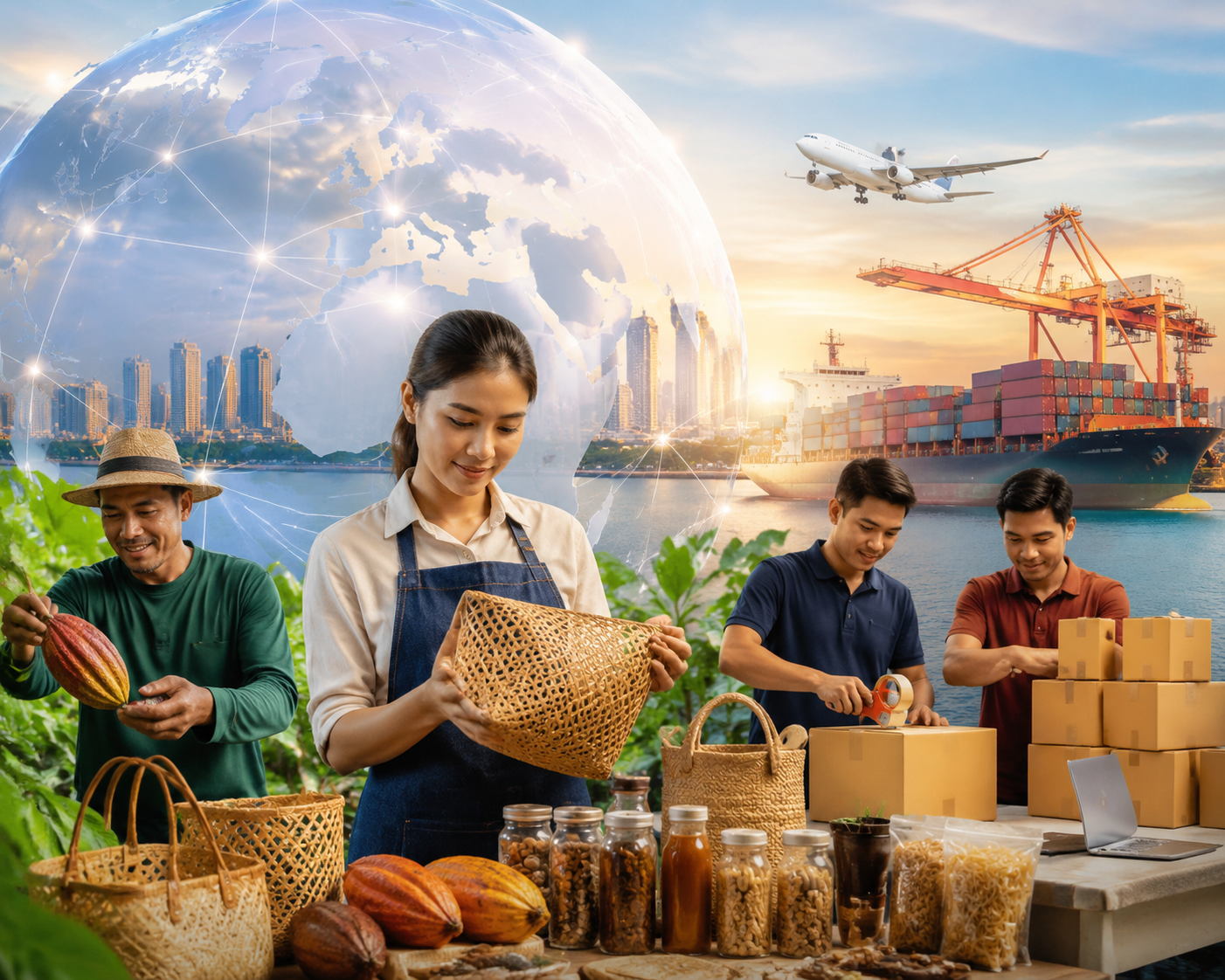
Local food producers, for example, have gained opportunities to introduce Filipino products such as processed foods, agricultural goods, and specialty products to wider markets.
Similarly, handicraft and creative businesses have benefited from government-supported trade initiatives that connect local artisans with domestic and international customers.
In provinces where agriculture is a major economic activity, partnerships between local governments and MSMEs have helped farmers move beyond raw material production by developing processed products with higher market value.
Instead of selling basic agricultural outputs, communities can create branded products that generate greater income.
The Importance of Digital Platforms in Global Expansion
Digital technology has become a major factor in helping Philippine MSMEs reach international consumers.
Through e-commerce platforms, social media marketing, and online payment systems, small businesses can promote products without requiring large physical investments.
Government digitalization programs have encouraged entrepreneurs to develop online business capabilities and participate in broader digital marketplaces.
This shift has created opportunities for rural businesses that previously had limited access to large consumer markets.
A small enterprise located outside major urban centers can now attract customers from different regions and even international locations.
Challenges in Building Globally Competitive MSMEs
Despite progress, several challenges remain.
Many MSMEs still require support in areas such as advanced technology adoption, financing, logistics, and international certification requirements.
Smaller enterprises may also struggle with maintaining consistent production capacity when demand increases.
Therefore, continued cooperation between governments, financial institutions, private companies, and business organizations remains necessary.
Future strategies should focus on creating stronger business ecosystems where entrepreneurs can access knowledge, funding, technology, and market connections.
Creating the Next Generation of Philippine Entrepreneurs
The partnership between Philippine local governments and MSMEs represents a significant shift toward more inclusive economic development.
By combining government resources with entrepreneurial creativity, communities can develop businesses that are innovative, sustainable, and globally competitive.
The future success of Philippine MSMEs will depend on continued collaboration that encourages technology adoption, improves market access, and strengthens entrepreneurial capabilities.
Through these partnerships, small businesses are gaining the opportunity to become major contributors to economic growth both within the Philippines and in international markets.