

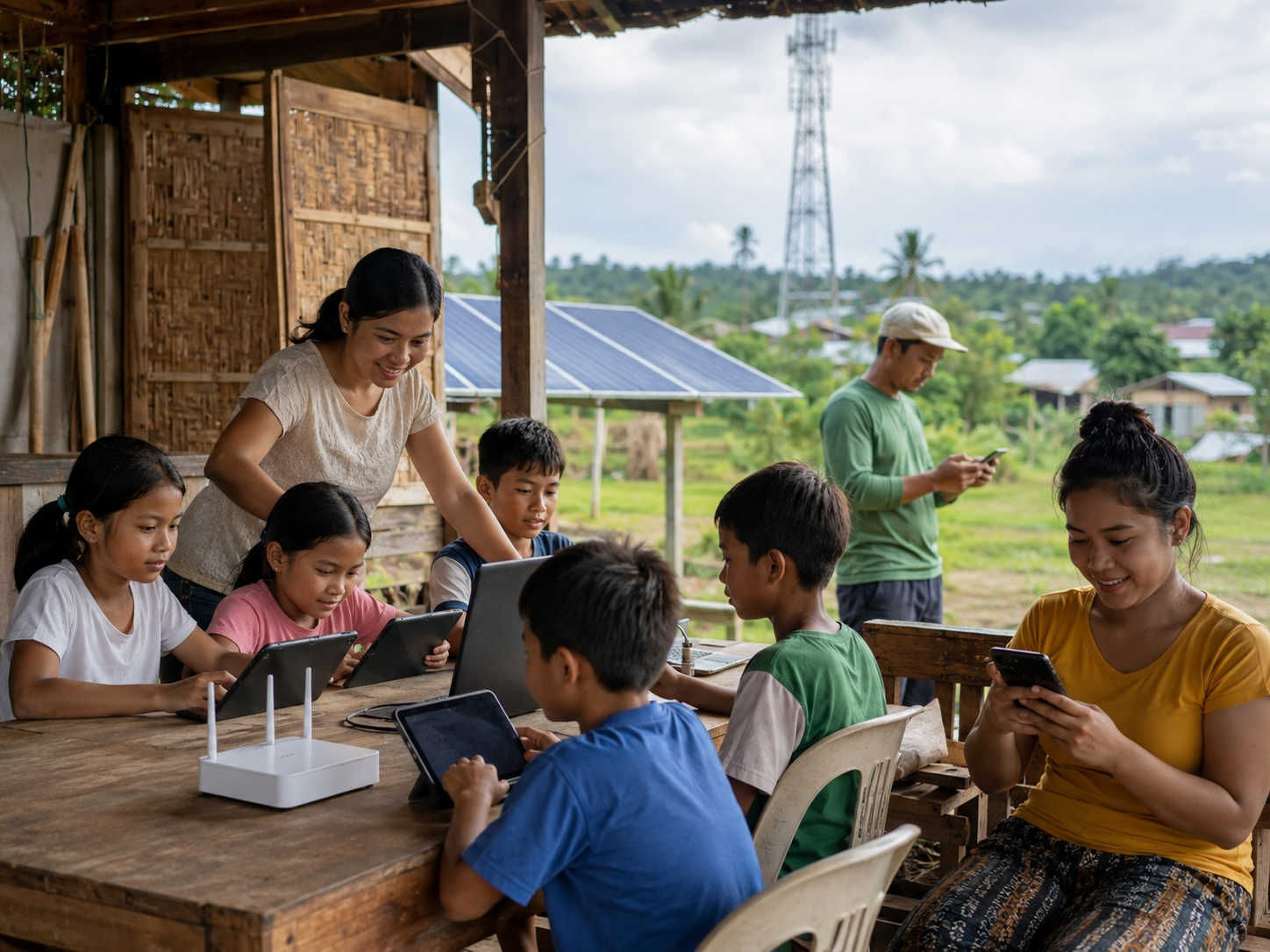
Digital access has become a basic requirement for education, employment, banking, commerce, and government services. Yet access remains uneven across the Philippines, particularly in geographically isolated communities, low-income households, and areas with limited infrastructure.
The digital divide involves more than the absence of an internet connection. Families may lack devices, electricity, digital skills, technical support, or the ability to pay for consistent service. Teachers may also need training to integrate technology into classroom instruction effectively.
Philippine companies are addressing these barriers through CSR programs that combine education, connectivity, equipment, and community capacity-building.
PLDT and Smart: Connecting Underserved Communities
As major telecommunications providers, PLDT and Smart are positioned to make digital inclusion a central part of their social-impact strategy.
Their education-related initiatives have included connectivity support, digital learning materials, online-safety campaigns, and technology packages for schools. One widely recognized model is School-in-a-Bag, which brings portable digital-learning tools to schools in areas where conventional technology infrastructure may be limited.
Information about the group’s current sustainability priorities can be reviewed through the official PLDT sustainability website.
Why Devices Alone Are Not Enough
Giving schools tablets, laptops, or connectivity packages can create an immediate benefit, but equipment may become unusable without maintenance, teacher training, replacement parts, security measures, and reliable electricity.
Effective digital-education programs should include technical support and locally relevant content. Teachers must also understand how to use digital tools as part of instruction rather than treating technology as a separate classroom activity.
Ayala and the Connection Between Finance and Technology
Ayala’s businesses in telecommunications, banking, healthcare, and property development create opportunities to address digital inclusion from several directions.
Connectivity can help residents access telemedicine, digital payments, online education, and employment platforms. Financial-literacy programs can also teach users how to avoid scams, protect account information, and evaluate digital-loan products.
This integrated approach is increasingly important as more economic activity moves online.
SM Foundation and Educational Mobility
SM Foundation’s scholarship and school-support programs demonstrate the continuing importance of formal education. Scholarships can reduce financial pressure on students, while improved school facilities create safer and more effective learning environments.
The next stage for corporate scholarship programs is stronger integration with digital skills, internships, mentoring, and employment pathways. Students need both academic qualifications and practical capabilities relevant to a technology-driven labor market.
Jollibee Group Foundation and Digital Tools for Agriculture
Digital inclusion also affects farmers and rural entrepreneurs. Mobile communication can help agricultural groups coordinate production, compare prices, communicate with buyers, receive digital payments, and access weather information.
Farmer-development programs can create greater impact by including basic data management, online communication, financial applications, and digital marketing.
Responsible Technology as a CSR Priority
Digital expansion creates risks as well as opportunities. Cybercrime, misinformation, online harassment, data-privacy violations, and financial scams can disproportionately affect first-time internet users.
Companies supporting digital inclusion should therefore include cybersecurity awareness, privacy education, child protection, and responsible online behavior in their programs.
Building Meaningful Digital Access
The success of digital CSR should not be measured only by the number of devices distributed or internet connections installed. Companies should evaluate whether students improved their learning, teachers continued using the tools, residents accessed new services, or participants secured employment and income opportunities.
By combining infrastructure, education, safety, and long-term technical support, Philippine businesses can help ensure that digital transformation reduces inequality instead of deepening it.