

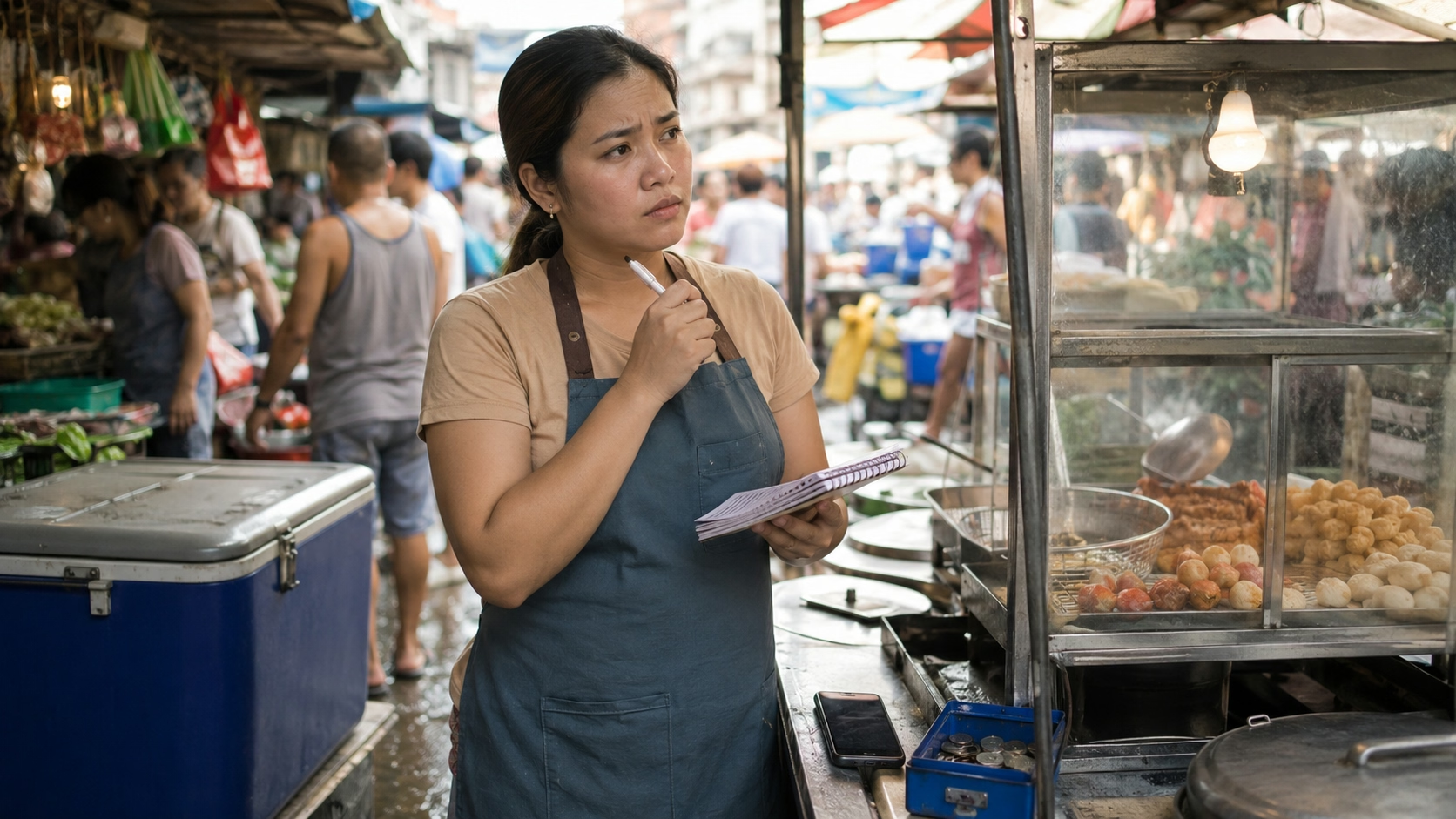
The Two-Front Competitive War
In Baguio’s public market, a textile stall owner sees her margins shrink from both the sidewalk vendor outside and the algorithm-driven discount campaigns of online shopping giants. Formal MSMEs pay taxes, rent, and compliance costs. Informal vendors do not. Meanwhile, large e-commerce platforms can subsidize prices and absorb logistics losses that small sellers cannot match. This two-front pressure leaves many registered micro-enterprises fighting for survival.
Informal Vendors and Price Undercutting
Unregistered street vendors often operate with zero overhead: no rent, no business permit, no value-added tax. They can sell identical products at 15 to 30 percent lower prices. For a registered micro-enterprise, this is not a level playing field. Local authorities sometimes tolerate informal vending for social or political reasons, but the economic distortion falls hardest on small formal businesses that comply with the law.
Case Study: A Baguio Textile Shop’s Fight Against Online Giants
A family-run textile shop in Baguio has sold woven fabrics and blankets for 20 years. In 2025, its monthly sales dropped 40 percent as shoppers shifted to an online platform that offered the same items at lower prices during flash sales. The shop tried to sell online but faced algorithmic ranking that favored paid advertisers. It now survives by offering customization and in-person weaving demonstrations—services that digital platforms cannot replicate easily.
2026 MSME Statistics Reveal Vulnerability
The Philippine Statistics Authority’s 2026 MSME census update shows that micro enterprises account for about 90 percent of total business establishments but generate only a small fraction of total revenue. Many operate in retail and food service, sectors with high informal competition. The PSA report also notes that business closures among micro firms rose in 2025 due to declining foot traffic and rising input costs. Access the Philippine Statistics Authority MSME data here.
Leveling the Playing Field Through Policy
Local governments are being urged to rationalize informal vending through designated zones and simplified registration that offers micro vendors incentives like access to microcredit and social protection. On the digital front, proposed regulations would require platforms to disclose algorithmic ranking factors and prohibit predatory pricing below cost in certain categories. For MSME owners, differentiation—through product quality, local authenticity, and customer experience—remains the most reliable defense against both informal and corporate competitors.