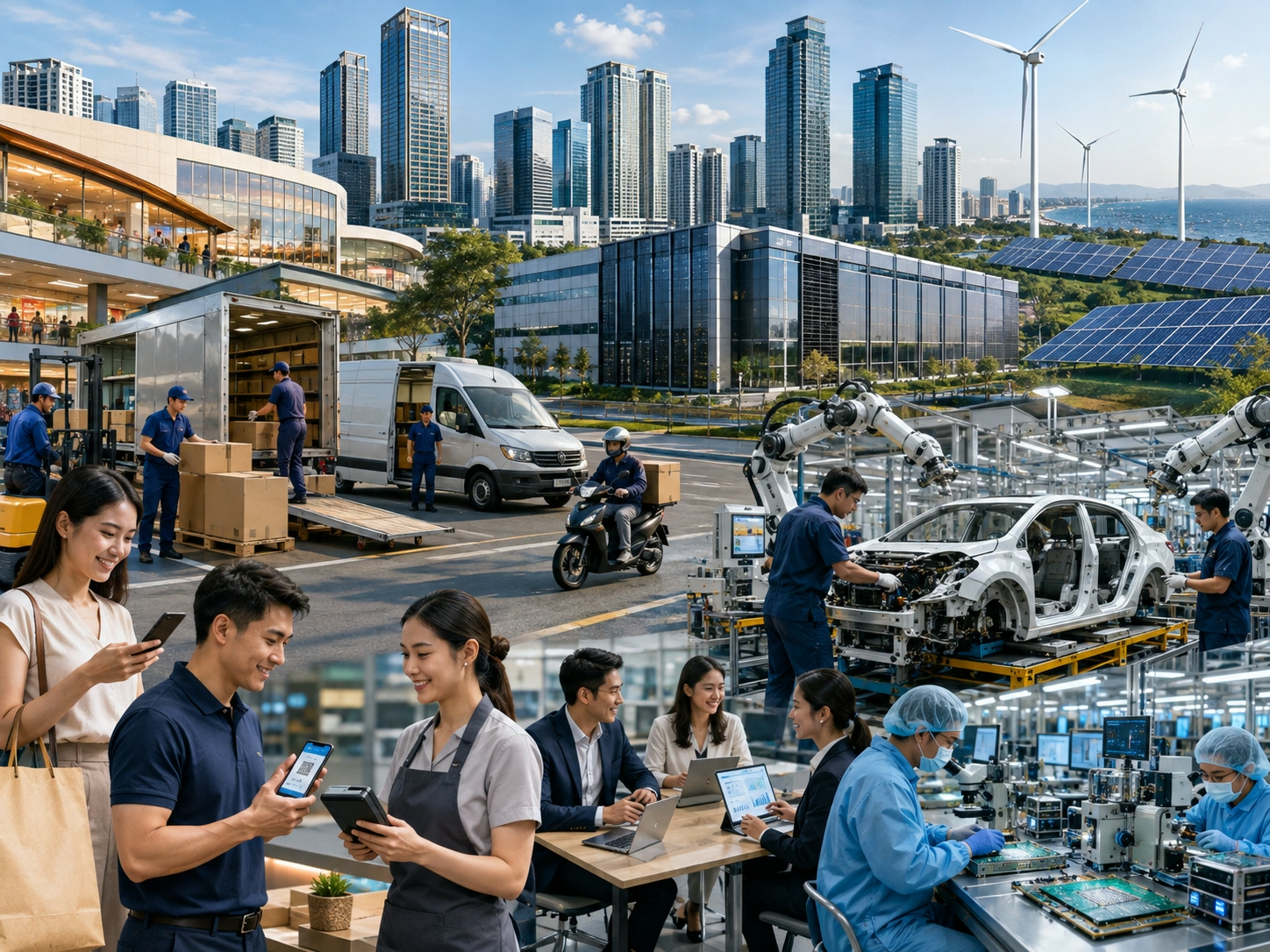

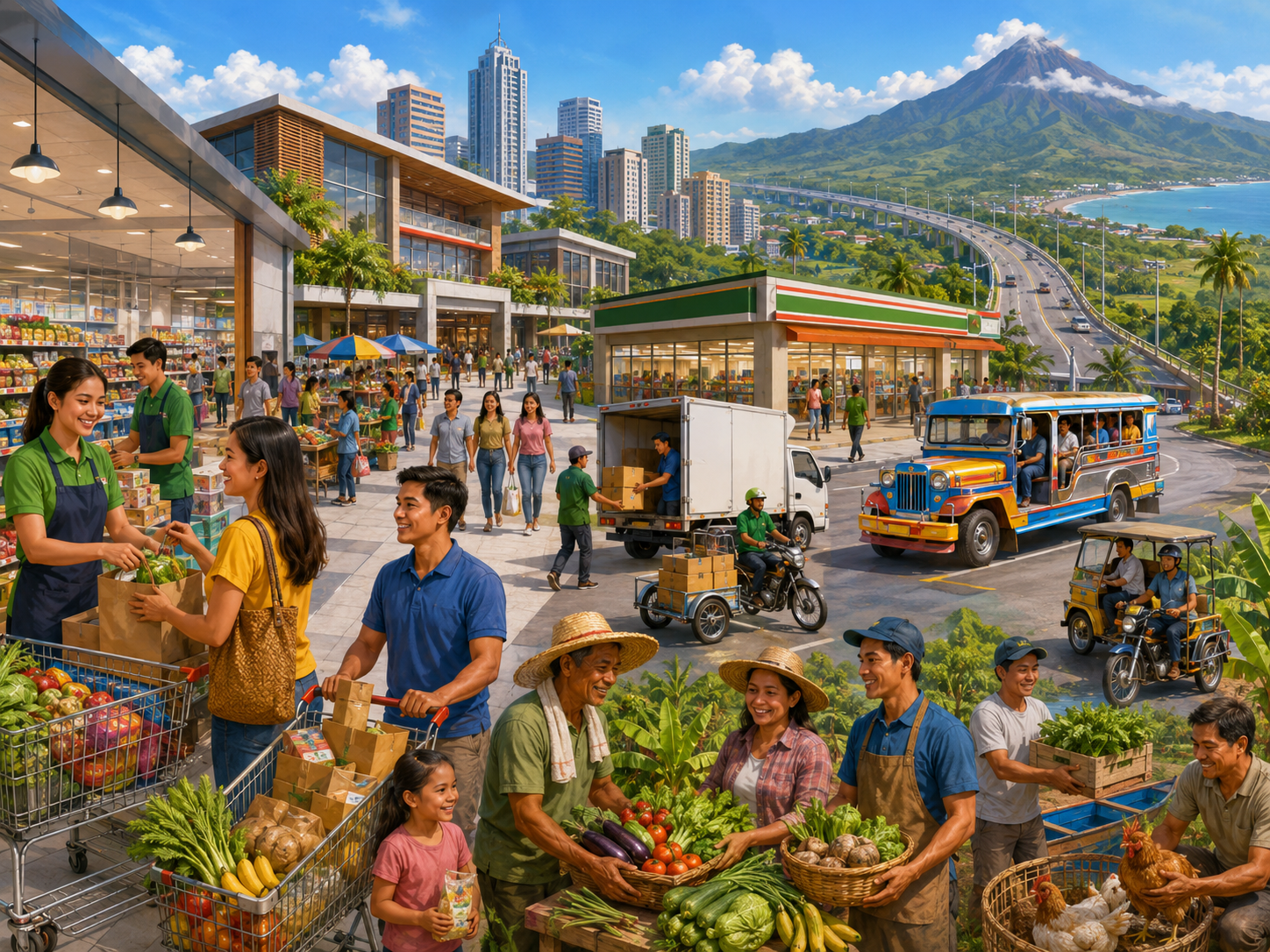
Retail businesses play a transformative role in the Philippine economy, impacting both urban and rural areas. From large supermarket chains to specialty retail stores, these companies affect employment, supply networks, consumer habits, and regional development, making them key drivers of economic activity.
The most immediate impact of retail businesses is job creation. Chains like SM, Robinsons, and 7-Eleven employ thousands of individuals in sales, administration, logistics, and management positions. These roles provide financial stability and opportunities for skill development, contributing to a more capable and competitive workforce. The employment provided by retail stores is particularly significant in regions with limited formal job opportunities, improving household incomes and local economic resilience.
Retail companies also support local suppliers. Many stores source goods from domestic producers, including farmers, manufacturers, and small businesses. By offering stable markets for local products, retail chains help increase earnings and encourage investment in production capacity. This mutually beneficial relationship strengthens the local supply chain, promotes entrepreneurship, and helps sustain traditional industries.
Infrastructure development is another area influenced by retail expansion. The construction of shopping centers, distribution hubs, and transport facilities often necessitates upgrades to roads, utilities, and public services. These improvements not only support retail operations but also enhance the accessibility and livability of surrounding areas. In turn, this infrastructure attracts complementary businesses, further stimulating local economies.
Consumer behavior is significantly shaped by retail companies. The convenience, variety, and competitive pricing offered by modern stores encourage organized shopping habits. Digital payment systems, promotions, and loyalty programs enhance transactional efficiency, while expanding access to goods and services. This increased consumer spending stimulates local markets and fosters broader economic circulation.
Nevertheless, the growth of large retail companies can challenge smaller, independent retailers. Lower prices and extensive marketing capabilities of large chains may reduce the market share for small businesses, affecting local diversity. Collaborative strategies, such as sourcing from local suppliers or supporting community-based initiatives, are essential to ensure that smaller enterprises remain competitive and benefit from retail-driven economic growth.
In conclusion, retail businesses in the Philippines significantly influence local economies. Through employment creation, supplier support, infrastructure development, and changes in consumer behavior, they contribute to community development and economic expansion. While competitive pressures exist for smaller enterprises, the overall impact of retail on local economic growth remains positive and far-reaching.