

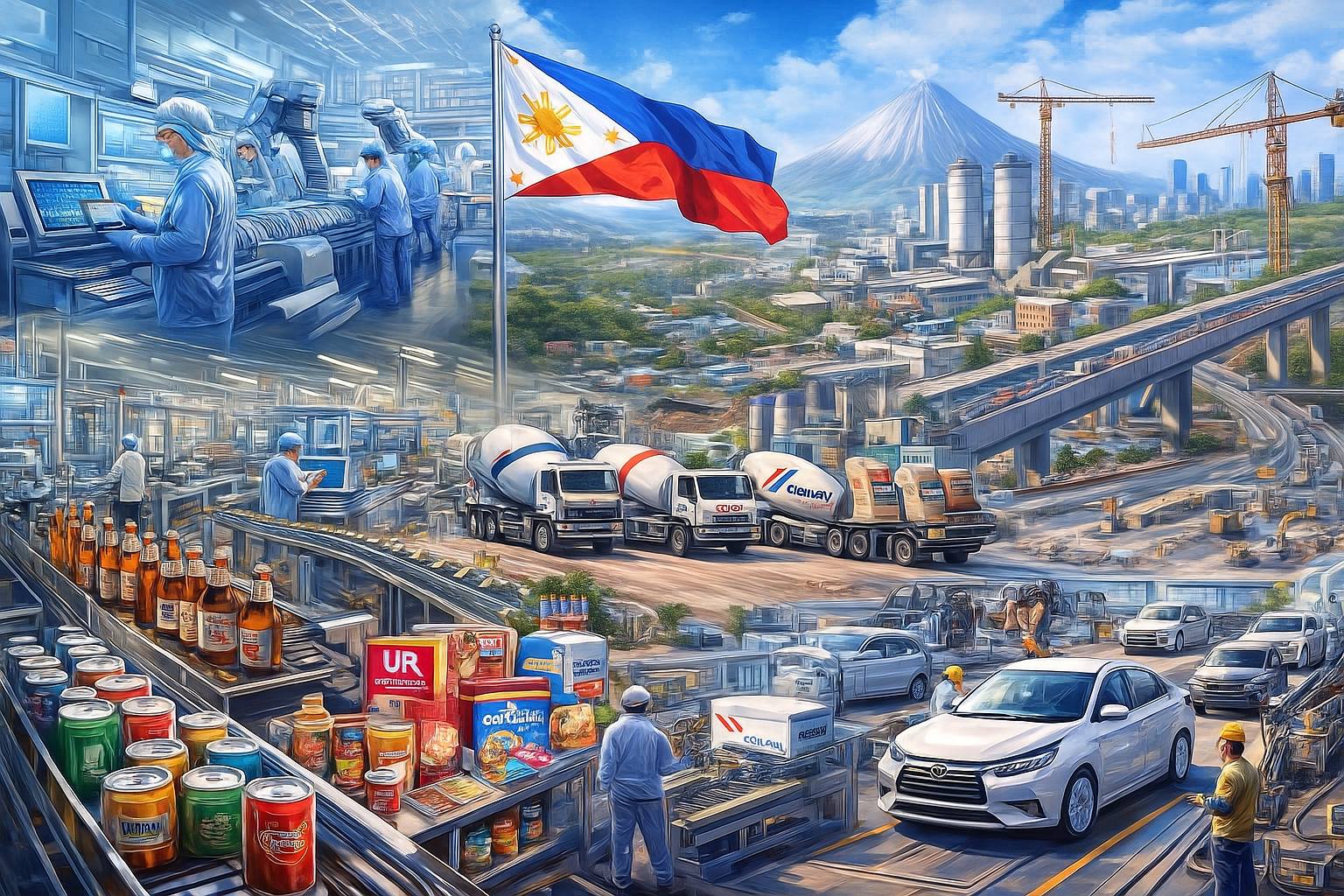
The Philippines stands out in Southeast Asia for its mix of export-focused and domestically oriented manufacturing activities. At the center of this sector are prominent companies that specialize in electronics, food and beverages, automotive products, and construction materials. Their operations demonstrate how the country leverages its human resources, geographic position, and policy environment to build an industrial base.
The electronics and semiconductor industry is a cornerstone of Philippine exports. Companies such as Texas Instruments Philippines, Analog Devices, and ON Semiconductor run high-volume facilities dedicated to assembly and testing operations. These plants turn wafers and components produced elsewhere into finished chips and modules used in consumer electronics, communications gear, and automotive systems. The workforce in these facilities ranges from line operators to engineers and quality-control specialists, all of whom play a role in maintaining the reliability and competitive cost structure that global customers demand.
In the food and beverage sector, Filipino and multinational companies alike have developed extensive manufacturing footprints. San Miguel Corporation operates breweries, food factories, and packaging plants that supply beer, spirits, processed meats, and dairy goods nationwide. Universal Robina Corporation manufactures snacks, instant coffee, powdered drinks, and other products that fill supermarket shelves and sari-sari stores across the country. Monde Nissin contributes to this ecosystem with popular brands of instant noodles, biscuits, and newer plant-based offerings that align with changing consumer preferences.
Global consumer goods companies also have a strong presence. Nestlé Philippines is a prime example, with factories producing coffee, milk, and culinary products tailored to local tastes. These facilities adhere to international quality standards and often serve as hubs for innovation in packaging, formulation, and nutrition within the region. Nestlé’s partnerships with farmers and suppliers create backward linkages that improve productivity and promote more sustainable agricultural practices.
The construction materials industry underpins the physical expansion of cities and infrastructure. Holcim Philippines, CEMEX Holdings Philippines, and Republic Cement operate plants that produce cement, aggregates, and related products. These companies supply both large-scale infrastructure projects and smaller residential developments, making them essential to the country’s long-term growth. Investments in alternative fuels, energy-efficient kilns, and environmental management systems reflect a growing emphasis on more sustainable operations in a historically resource-intensive industry.
In the automotive and components sector, manufacturers contribute to industrial diversification and skill development. Toyota Motor Philippines and Mitsubishi Motors Philippines maintain assembly operations that produce vehicles for local buyers, supported by a network of local parts suppliers. Wire harness and automotive electronics manufacturers, including subsidiaries linked to Japanese groups like Yazaki, export their products to assembly plants around the world. This highlights the role of the Philippines not only as a consumer market but also as an integral part of global automotive supply chains.
Collectively, these leading manufacturing companies showcase the strengths and complexities of the Philippine industrial landscape. They help absorb the growing labor force, provide training and career paths, and encourage the adoption of international standards in quality, safety, and environmental management. As they continue to invest in technology upgrades and process improvements, these firms will remain central to the country’s efforts to move up the value chain in regional and global manufacturing.