

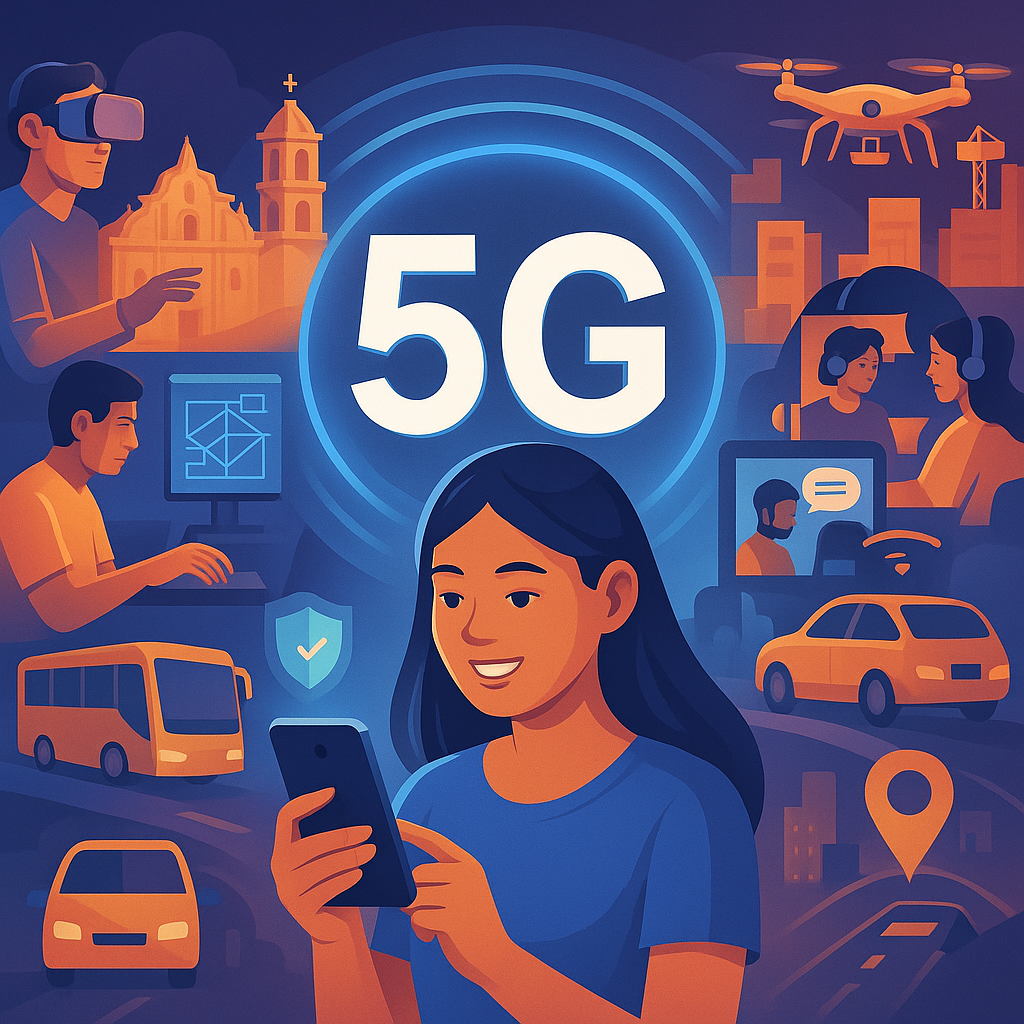
For years, bandwidth and reliability have been quiet constraints on what Filipino startups could build. Many ambitious product ideas had to be scaled down because networks could not support heavy data usage or high responsiveness. The arrival of 5G is loosening these constraints, turning connectivity from a limitation into a powerful enabler for creativity and experimentation.
At a technical level, 5G enables faster downloads, smoother uploads, and connections with much lower delay. This matters for services where milliseconds count—such as online gaming, trading platforms, and collaborative design tools. Filipino startups in these spaces can now offer experiences that feel comparable to global players, even when accessed on mobile devices. Lower latency also allows for more responsive AI-powered assistants, real-time language translation, and interactive learning tools.
One exciting area is immersive media. AR and VR applications require both high bandwidth and stable low latency to avoid motion sickness and stuttering visuals. With 5G, startups can develop virtual tourism experiences that let users “walk through” famous Philippine destinations from their phones or headsets. Museums and cultural institutions can collaborate with tech teams to create interactive exhibits that blend physical and digital worlds, opening new ways to monetize heritage and art.
In the business-to-business (B2B) realm, 5G unlocks advanced enterprise solutions. Filipino startups can provide remote inspection services using drones, live 4K video, and AI-based damage detection for sectors like real estate, construction, and utilities. Real-time collaboration tools with synchronized audio-visual feeds enable distributed teams to work on complex tasks, such as product design or media production, without needing to be physically present in the same studio or office.
The transportation sector also stands to gain. Startups can offer 5G-enhanced navigation services, ride-sharing optimizations, and integrated public transport apps that depend on live data feeds. As connected vehicle technologies progress, entrepreneurs can explore services like usage-based insurance or fleet safety systems that rely on continuous data transmission from vehicles. These models hinge on reliable, high-capacity networks that can handle constant communication.
However, realizing these opportunities requires thoughtful planning. Not all regions will have strong 5G coverage immediately, and many users will continue using older devices for some time. Filipino startups should design solutions that degrade gracefully to 4G while offering extra features or superior performance for those on 5G. This dual-track approach ensures inclusivity and helps maintain a broad user base during the transition phase.
Security and privacy are central considerations as more devices and data streams connect to the network. Startups must adopt robust encryption, secure authentication, and responsible data practices to protect users and comply with local regulations. Firms that can position themselves as trustworthy will have a competitive edge, especially in sensitive sectors like healthcare, finance, and government services.
Ultimately, 5G is not just about speed; it is about enabling new forms of collaboration, interaction, and value creation. For the Philippines, where creativity, resilience, and entrepreneurial energy are abundant, the technology provides a platform on which startups can build products that resonate both at home and across the region. The ventures that succeed will likely be those that pair deep understanding of local needs with bold experimentation on this new digital infrastructure.