
The nearshoring narrative around the Philippines tends to emphasize the upside: a young, English-fluent workforce, treaty alliances, and a manufacturing base that has been assembling electronics for half a century. The risk side of the ledger is equally important, and in 2026 it is being priced more explicitly by the companies that are actually moving production.
The Electricity Penalty Is Structural
Industrial electricity in the Philippines runs close to 15 US cents per kilowatt-hour, roughly 50% above Indonesia and Vietnam, according to the OECD’s 2026 survey. That is not a temporary spike caused by fuel prices. It reflects a generation mix and market structure that have made power one of the country’s most persistent competitiveness gaps.
The Hormuz crisis and the Philippines’ heavy reliance on Middle Eastern oil imports have compounded the problem, but the underlying issue is domestic. Twenty-one power plants were reportedly under forced outage at one point, forcing distributors to rely on expensive oil-based generation and driving spot prices higher. For a manufacturer choosing between Batangas and a Vietnamese industrial park, the electricity differential is a recurring cost that compounds over the life of a facility.
PEZA has begun addressing the problem by tapping Primelectric to build dedicated ecozone power grids, and CREATE MORE offers enhanced deductions on power costs for registered enterprises. Those measures help at the margin, but they do not change the national grid’s cost structure. Until generation and transmission investment closes the gap with neighbors, power will remain a tax on manufacturing competitiveness.
Port Congestion Is a Recurring Bottleneck
In October 2026, Hapag-Lloyd suspended new bookings to Manila, Batangas, and Subic until the end of the year, citing persistent congestion and difficulties returning empty containers. The suspension was a direct threat to electronics manufacturers that depend on sea freight for imported components and export shipments.
Port inefficiency is not a new problem, but its timing is unfortunate. It coincides with the moment when nearshoring interest is translating into actual leases and factory expansions. A manufacturer that has committed to a PEZA locator cannot easily absorb two-to-four-day vessel waiting times or unpredictable empty-container availability. Logistics costs already consume about a quarter of sales in the Philippines, and congestion makes that share harder to compress.
Governance Risk Is Back on the Board Agenda
Verisk Maplecroft’s 2026 Supply Chain Risk Outlook identifies the Philippines as a “rising star” alongside Thailand, Argentina, Chile, and Uruguay, citing improvements in market openness, competitive labor costs, and a young, English-fluent workforce. But the same report warns that high-profile public works corruption allegations and political jockeying are among the top factors causing near-term investor hesitation.
That tension—between improving structural fundamentals and unresolved governance questions—is the defining feature of the Philippine nearshoring story in 2026. Companies that move first may gain supplier relationships and site control before demand peaks, but they are also accepting execution risk that is not present in Singapore or Malaysia.
What Sophisticated Investors Are Doing
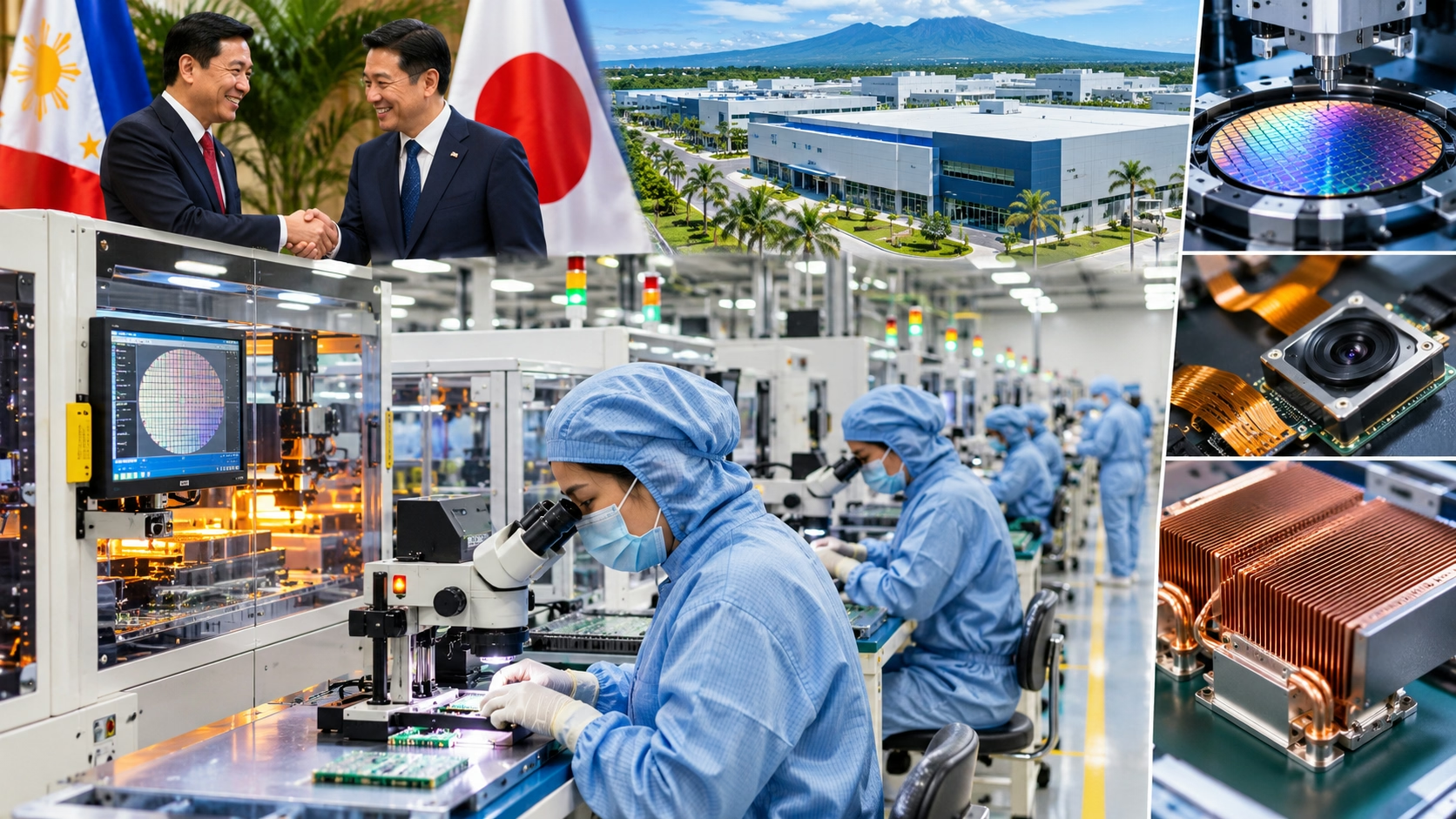
The practical response is not avoidance but risk segmentation. Manufacturers are separating activities that require reliable power and deep-water ports from those that can tolerate intermittency. Back-end semiconductor packaging, which needs stable electricity but not necessarily mega-ship access, is expanding. Advanced fabs and energy-intensive data centers are waiting for the power equation to improve.
Some are using fiscal tools to offset risk: CREATE MORE incentives, PEZA accreditation, and green-lane approvals reduce time-to-market and tax burden. Others are diversifying geographically within the country, moving to Davao, Cagayan, or New Clark City where land and labor are cheaper, even if infrastructure is less mature.
The Philippines does not need to eliminate its cost disadvantages to win nearshoring investment. It needs to make them predictable and declining. Power costs that are high but falling, ports that are congested but reforming, and governance that is imperfect but improving are investable conditions. The risk is that the current momentum stalls before those trajectories become visible to the manufacturers now making site-selection decisions.