
The Numbers Behind the Narrative
Women entrepreneurs are not a niche segment of Philippine social commerce — they are its backbone. According to the Philippine Commission on Women, 66% of SMEs are owned by women, while 62% of newly registered businesses under the DTI are women-led. This statistical reality means that when platforms design seller training programs or when government agencies craft digitalization initiatives, they are, in practice, designing for women.
Bridget Cortez and the P15,000 Loan That Built a Brand
The story of Bridget Cortez illustrates how social commerce collapses the traditional barriers to business scaling. A P15,000 loan from her grandmother was all she needed to turn a high-school side hustle selling contact lenses into a homegrown brand now serving customers in the Philippines and overseas. After expanding her use of TikTok livestreaming, affiliate partnerships, and additional platform tools, her brand recorded a 300% increase in sales. This is not an outlier; it is a pattern emerging across categories.
Emmanuel Gantalao and Naturefood — From Rural Producers to National Reach
Naturefood, founded by Emmanuel Gantalao and Bryan Lagman, expanded operations and sales by 300% after utilizing TikTok livestreams and affiliate sellers to connect rural producers with a broader customer base. The founders increased their use of livestreaming after receiving positive feedback from suppliers and customers, demonstrating that the feedback loop in social commerce is faster and more direct than in traditional retail.
Made In Mnl — Sibling Founders and the Creator-Led Model
Made In Mnl, a clothing brand founded by siblings Flyntt Lisondra and Scyd Lynch Lisondra-Muyot, credits TikTok Shop’s livestream selling features and seller support programs for helping them reach a wider audience and compete in a crowded market. Their experience reflects a broader truth: for women-led MSMEs, the combination of short-form video and live selling provides a distribution channel that does not require traditional retail partnerships or large advertising budgets.
Why This Matters Beyond Individual Success
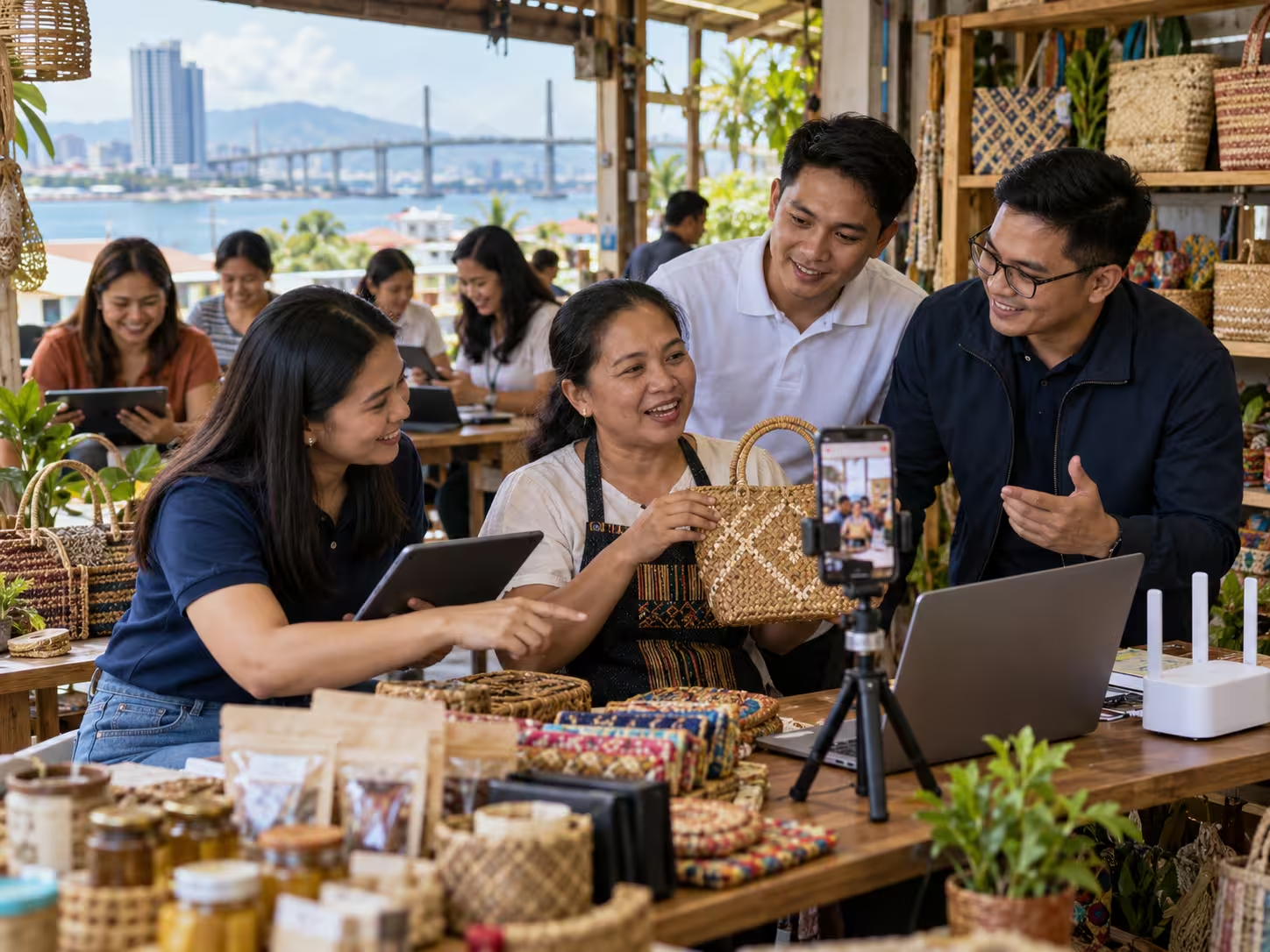
The concentration of women in MSME ownership means that platform-level interventions — such as Unlad Lokal’s 25,000 trained entrepreneurs or the DSWD’s SLP-TikTok Shop collaboration in Valenzuela and Ilocos Sur — disproportionately benefit women-led businesses. When these programs succeed, they do not just create individual success stories; they shift household incomes, community spending, and local economic resilience.