

The First Bank Account They Never Opened
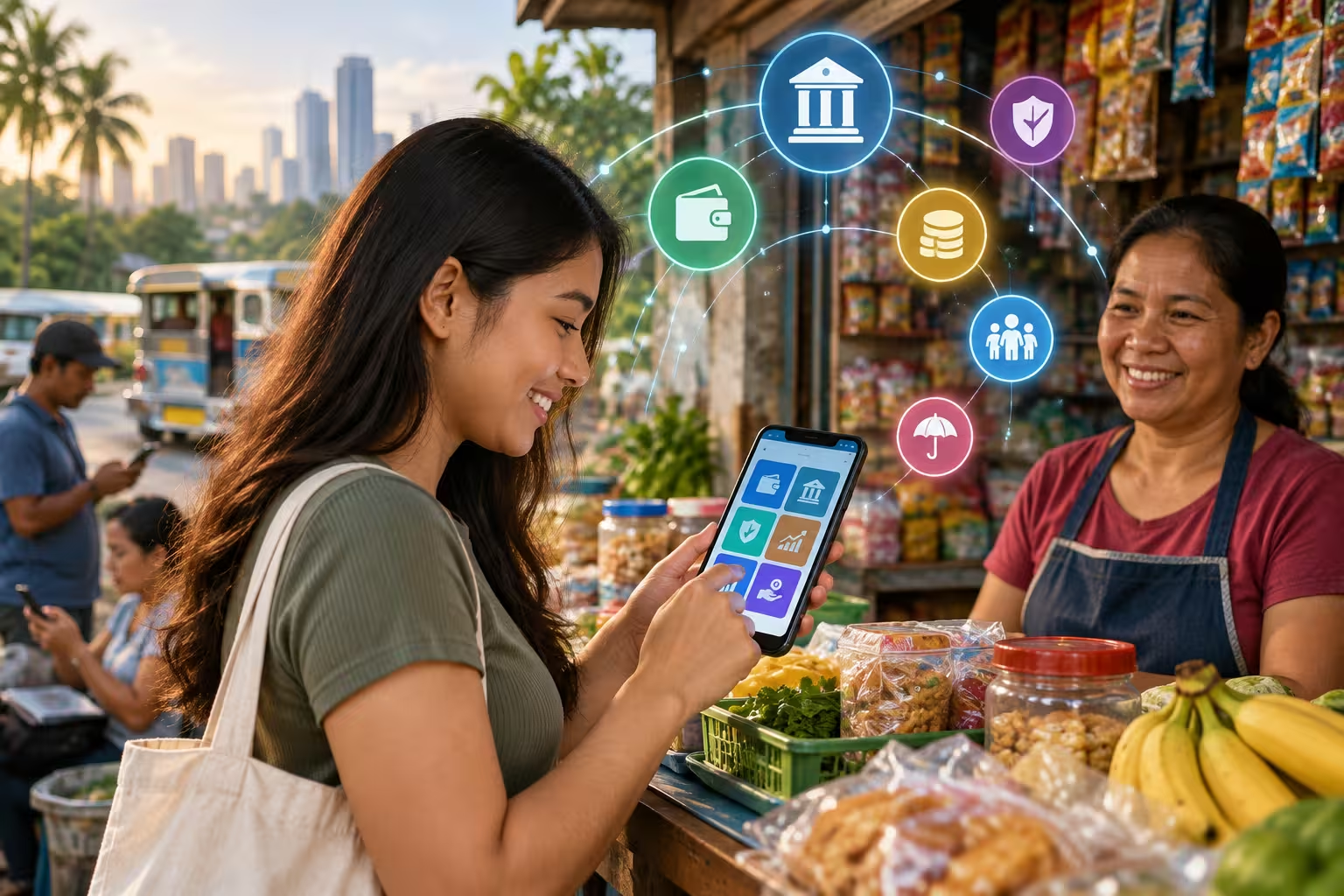
For millions of Filipinos, the journey into the formal financial system does not begin at a bank branch. It begins inside an app they already use — to message family, buy load, or pay a bill. Embedded finance has fundamentally altered the consumer experience of banking in the Philippines, transforming financial services from something you seek out to something that finds you.
The numbers tell a story of rapid adoption. GCash serves over 90 million users, embedding savings, insurance, wealth products, and credit directly into its platform. Maya has built an integrated wallet and digital banking ecosystem that meets customers where they spend their time. And Fuse Financing, GCash’s lending arm, has disbursed ₱451 billion in loans to 11.5 million borrowers, with one in three being a nano or micro enterprise.
For consumers, this represents not just convenience but first-time access. A sari-sari store owner who has never had a bank account can now build a digital financial footprint through GCash for Business, then use that footprint to access working capital through GLoan Negosyo. A BPO worker receiving salary through Maya Business can immediately open a savings account and begin building credit. The barrier between “unbanked” and “banked” is dissolving.
The Wallet as a Financial Gateway
The Philippine consumer’s relationship with embedded finance often begins with a wallet. A prepaid or debit card linked to a mobile wallet can represent the first step into regulated financial services for unbanked customers. From there, the journey expands.
PalaSave, the savings feature embedded in PalawanPay through RCBC’s DiskarTech platform, illustrates this progression. The product was designed with accessibility in mind: low incremental deposit requirements, easy enrollment, and competitive returns. Within days of launch, it had onboarded 60,000 new depositors. Karlo Castro, President and CEO of Palawan Group of Companies, explained the philosophy: “We believe saving should be simple. More importantly, saving should be inclusive”.
This is the consumer experience of embedded finance: financial products that feel less like banking and more like a natural extension of daily digital life.
BNPL and the Rise of Contextual Credit
For younger, digitally native Filipinos, the entry point is often Buy Now, Pay Later (BNPL). The Philippine BNPL market is projected to reach ₱45 billion in transaction value by 2026, growing at over 20% annually. Unlike traditional credit cards, which require formal income documentation and credit history, BNPL products are embedded at the point of sale — whether in an e-commerce checkout or inside a super app — and are underwritten using alternative data.
This contextual credit model is particularly powerful for consumers who have income but lack formal credit records. As one industry analysis notes, “Embedded lenders rely on alternative data — such as transaction histories, platform activity, payment behavior, and cash flows — to assess creditworthiness. This allows them to serve borrowers who lack formal credit records but demonstrate real economic activity”.
For these consumers, embedded credit is not a luxury. It is the first time the formal financial system has recognized their economic activity and extended them a line of credit.
Trust, Security, and the Human Element
As embedded finance scales, consumer trust becomes the most valuable currency. Lito Villanueva, Executive Vice President of RCBC, emphasized that digital services alone are not sufficient: “Technology scales, but trust sustains. And in today’s environment, where global instability fuels local anxiety, trust becomes the most valuable currency of all”.
This trust is built through consistent user experience, transparent terms, reliable human support when issues arise, and robust security against rising cyber threats and digital fraud. For embedded finance to fulfill its promise of inclusion, it must not only reach consumers — it must earn and keep their confidence.
The Next Wave: Insurance, Wealth, and Beyond
The consumer journey does not end with payments and credit. Embedded insurance, wealth management, and investment products are the next frontier. The Philippine embedded finance market spans five major verticals — payments, lending, insurance, banking, and investments & wealth management — and is forecast to grow at a CAGR of 10.0% from 2026 to 2030.
As these products become embedded into everyday apps, the consumer experience of financial services will continue to shift: from something you do at a bank, to something that happens seamlessly within the digital platforms you already trust.