
The Intermittency Challenge
As the Philippines adds more solar and wind capacity, the grid faces a fundamental challenge: intermittency. Solar output drops at night; wind varies with weather. Without solutions, this variability threatens reliability. Energy companies are responding with battery energy storage systems (BESS), smart grid technologies, and hybrid generation models.
Battery Storage Takes Center Stage
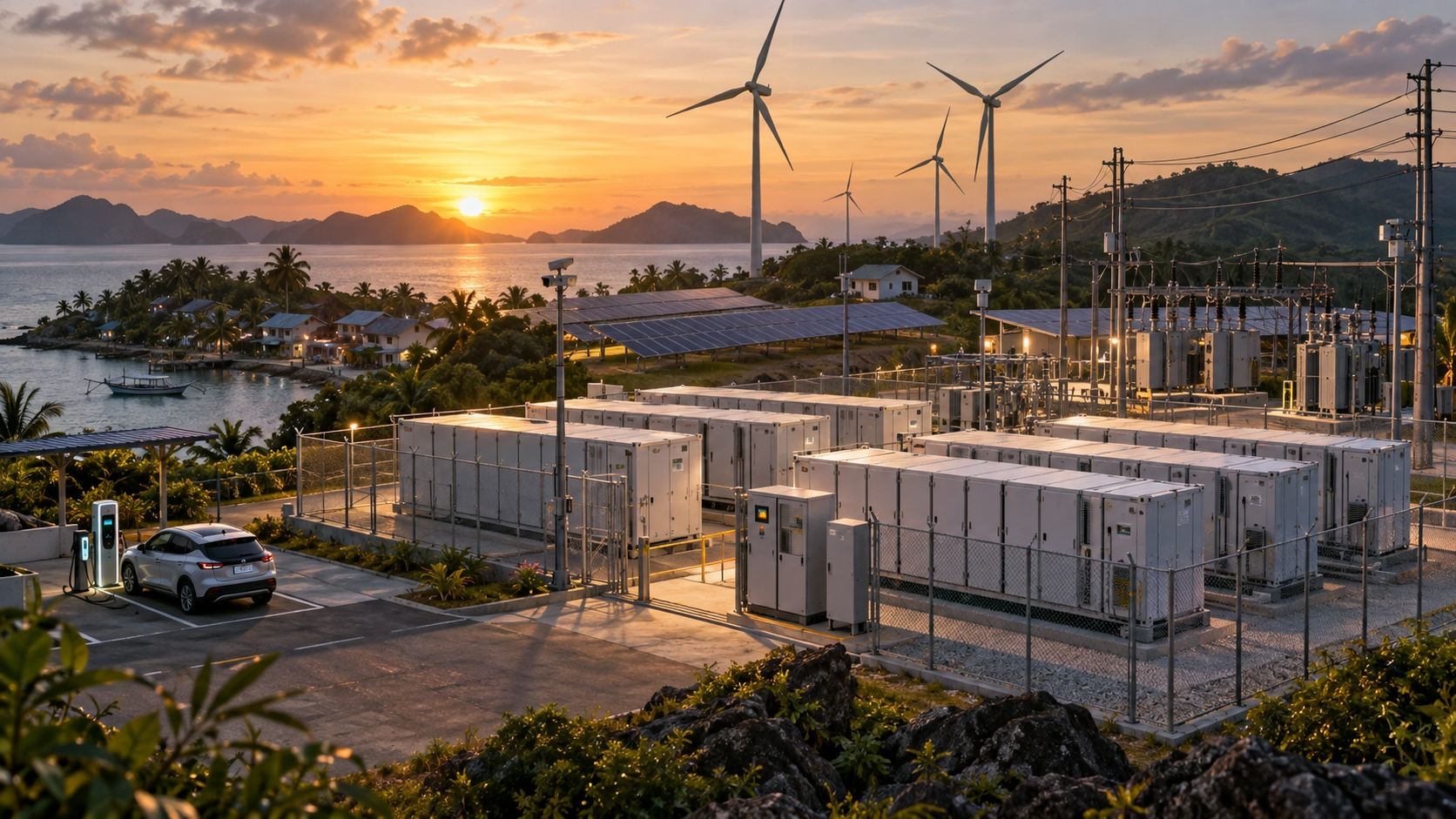
Several large-scale BESS projects have been announced or commissioned in the Philippines. These systems store excess solar power during the day and discharge it during peak evening demand. Companies like AboitizPower and ACEN are integrating BESS into their renewable portfolios. The technology is also being deployed at the distribution level to defer costly grid upgrades. According to the Global Wind Energy Council, storage is a key enabler for higher renewable penetration in island grids.
Smart Grids and Digitalization
Smart grid technologies—advanced metering infrastructure, distribution automation, and grid-edge sensors—allow utilities to manage two-way power flows. The Manila Electric Company (Meralco) has been piloting smart grid projects in selected areas. These innovations reduce losses, improve outage response, and enable demand response programs.
Hybrid Systems and Microgrids
For off-grid islands, hybrid systems combining solar, diesel, and batteries offer reliable and affordable power. Companies like Solar Philippines and WeGen have pioneered microgrid models. These systems are particularly impactful in remote communities where extending the main grid is uneconomical.
The Role of Electric Vehicles and Demand Response
Electric vehicles (EVs) are emerging as a distributed storage resource. Through vehicle-to-grid (V2G) technology, EV batteries can feed power back to the grid during peak demand. While still nascent in the Philippines, pilot projects are underway. Demand response programs, which incentivize consumers to reduce usage during peaks, are also gaining traction.
Investment and Policy Support
The DOE’s Energy Storage Roadmap and the Energy Regulatory Commission’s (ERC) rules on ancillary services provide a policy foundation. However, financing remains a hurdle. Blended finance and public-private partnerships are seen as critical to scaling storage.
The 2026 Horizon
By 2026, storage and smart grid investments are expected to accelerate, driven by falling battery costs and rising renewable shares. The Philippines’ ability to integrate these technologies will determine whether its renewable ambitions translate into a reliable, affordable, and sustainable power system.