

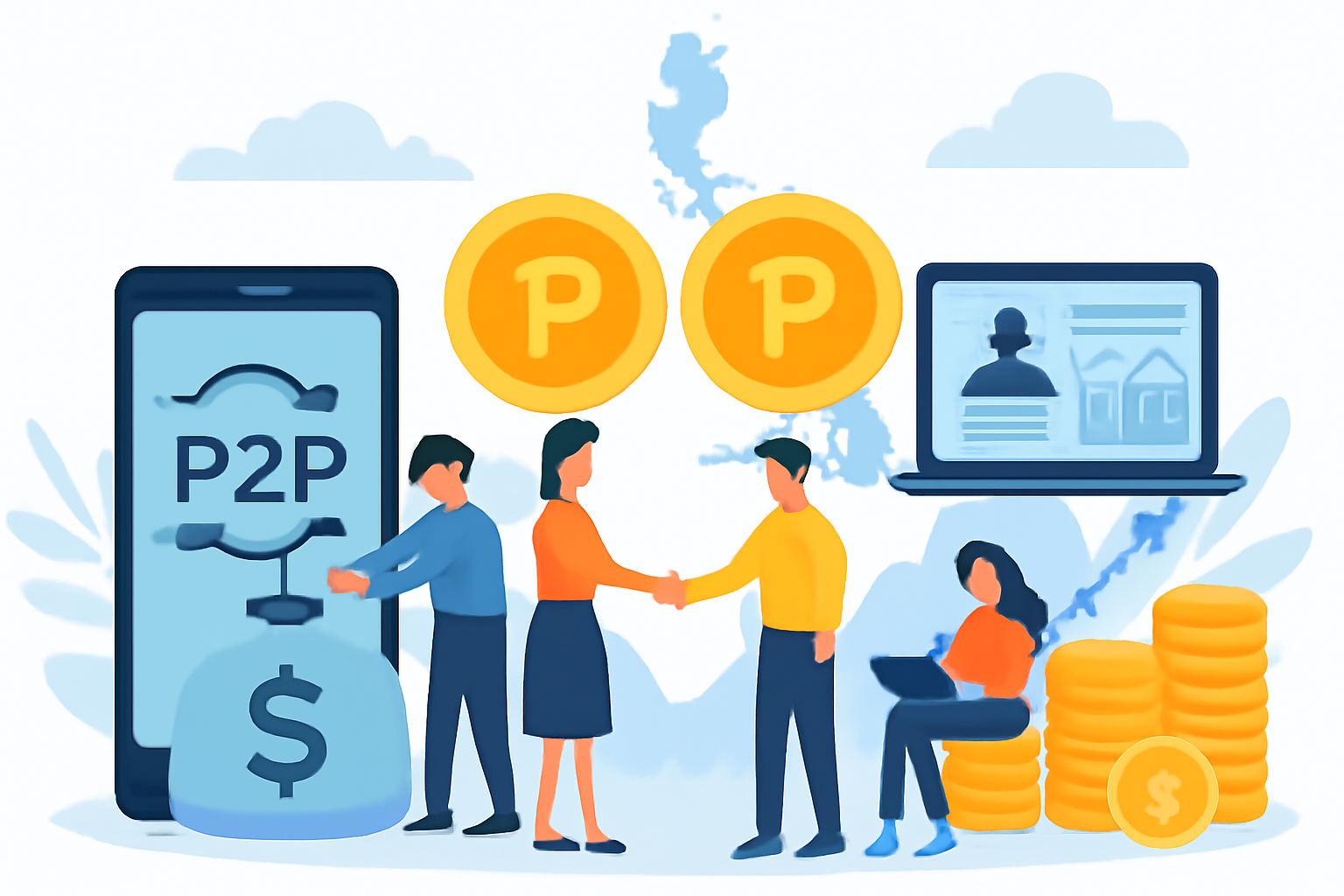
Peer-to-peer (P2P) lending has emerged as a promising investment strategy in the Philippines, providing individuals with opportunities to lend money directly to borrowers through online platforms. This alternative financing method is gaining popularity as an effective way to diversify investment portfolios and potentially earn higher returns. However, like any investment vehicle, P2P lending presents a unique set of opportunities and risks for investors to consider.
Key Benefits for Investors
- High Return Potential:
P2P lending offers attractive interest rates, often far above those available from traditional bank savings accounts or fixed-income instruments. In the Philippines, these returns can range from 10% to 20% annually, depending on the risk level of the loans. For investors seeking higher-yield opportunities, P2P lending can provide a viable solution. - Support for Financial Inclusion:
The Philippines has a large underserved population with limited access to formal banking services. P2P lending platforms can help address this gap by providing financing to individuals and small businesses that traditional financial institutions may overlook. By investing in these loans, investors not only stand to earn returns but also contribute to promoting financial inclusion in the country. - Investment Diversification:
P2P lending presents an opportunity to diversify an investment portfolio beyond traditional asset classes like stocks and bonds. By participating in P2P lending, investors can include loans of varying risk profiles, helping to balance their portfolios. This can be particularly beneficial in times of economic uncertainty, as P2P loans are not directly tied to stock market movements.
Key Challenges to Consider
- Risk of Borrower Default:
The main risk in P2P lending is the potential for borrower default. Many borrowers in the Philippines may not have established credit histories, which makes it harder to predict their repayment behavior. While platforms may use credit scoring or other mechanisms to assess risk, defaults still occur, and investors could lose their capital. - Regulatory Risks:
The P2P lending sector in the Philippines is still maturing, and the regulatory environment remains unclear. Although the government is working on developing guidelines for the sector, the lack of comprehensive regulations creates uncertainty for investors. Regulatory changes could alter the functioning of platforms or the terms of lending, potentially impacting returns. - Platform Risks:
P2P lending platforms are often startups or small businesses with limited financial resources. If a platform faces financial trouble or shuts down, investors could lose access to their funds or face delays in receiving payments. Therefore, it is critical for investors to carefully research the platform’s financial stability and reputation before committing funds. - Liquidity Constraints:
P2P loans are typically illiquid investments, meaning that once funds are invested, they cannot be easily accessed until the loan term concludes. This lack of liquidity could pose a problem for investors who need to access their funds quickly.
The Road Forward
As the Philippines’ fintech sector continues to grow and evolve, the outlook for P2P lending remains positive. Increased internet access, mobile banking adoption, and a push for financial inclusion are likely to drive further growth in the sector. However, investors must stay vigilant about the risks involved, including borrower defaults, platform reliability, and the evolving regulatory environment.
With proper research, risk management, and diversification strategies, P2P lending can be a rewarding investment opportunity in the Philippines, providing high returns while helping to support the country’s unbanked population.